
Need a clearer handover after food equipment maintenance? Review AFVA food safety and quality consulting or contact AFVA for free initial guidance.
Food equipment maintenance is not finished simply because a machine runs again. A repair may leave exposed surfaces, loose materials, changed settings or unanswered questions about food handled around the work. Before restarting, the team needs a clear handover from the repair to the operating controls.
For New Zealand food businesses, a practical return-to-service record connects what was done with cleaning, inspection and any relevant performance checks. It also identifies who is authorised to accept the equipment for its intended food use. This guide focuses on that food-safety handover, rather than repair instructions.
Quick answer: Define the work and affected area, protect food during maintenance, account for tools and parts, restore the required hygienic condition and check relevant operating controls. Record unresolved issues and the responsible return-to-service decision. An engineering handover and a food-safety acceptance check answer different questions; both may be needed before use.
Connect the repair to your food-safety system
MPI’s August 2026 Simply Safe & Suitable plan calls for checking deterioration, servicing equipment and keeping maintenance or repair records identifying who did the work and when. It also covers cleaning and safe chemical use. Read the relevant maintenance and cleaning cards in the Simply Safe & Suitable plan hosted by Waitaki District Council and follow the plan applying to your operation.
The Codex General Principles of Food Hygiene supports keeping equipment suitable for its task, preventing contamination during maintenance and using appropriate cleaning procedures. The detailed handover below is a recommended way to organise those controls. It is not a universal statutory form or a substitute for an equipment manufacturer’s instructions.
The type of work matters. Replacing a fridge component, opening a food-contact assembly and altering a control setting do not create the same questions. Agree a proportionate check for the actual repair, the food and the part of the process affected. Obtain competent engineering or other specialist input where necessary.
Agree the food-safety boundaries before work
Give the maintenance provider enough information about the equipment and food operation to plan the work properly. Identify the machine, fault, work area, nearby activities and any exposed food or food-contact packaging. Discuss how the area will be protected and who will coordinate production, cleaning and the final handover.
- Identify what must stop or be moved before work starts, following the business’s arrangements.
- Agree access, hygiene and contractor communication requirements for the area.
- Identify parts, consumables and maintenance chemicals intended for the work; check suitability for the intended application.
- Explain what the operator needs in the service report, including parts changed, work completed, relevant settings and remaining limitations.
- Plan cleaning and acceptance checks before production time becomes urgent.
Keep machinery isolation, electrical work, guarding and safe testing with the competent people and procedures responsible for those matters. A food-safety checklist does not establish that machinery is mechanically or electrically safe. Do not ask food handlers to bypass a guard or energise equipment simply to complete an inspection.
Use a clear return-to-service handover
A useful handover tells the next person what actually happened. “Serviced” or “all good” may be too vague to decide what needs cleaning or checking. Record the specific work and changes, then link the maintenance report to the food-safety checks. Record checks when they occur rather than signing them in advance.
On a small screen, swipe sideways to view all columns.
Do not record a missing part as “probably in the bin”. Describe the discrepancy and resolve it through the appropriate assessment. The same applies to an unexpected mark, damaged seal or unexplained change in a setting. The objective is an evidence-based decision, not a form that always ends with a tick.
Restore hygiene and check affected controls
Look beyond the component that was repaired. Ask whether adjacent food-contact surfaces, covers, utensils, packaging or the surrounding area were exposed to debris, hands, tools, lubricants or cleaning residues. Use the applicable safe cleaning method and the equipment instructions. Do not use water or chemicals on parts that are not designed for them.
Cleaning and sanitising serve different purposes. For operations using Simply Safe & Suitable, follow its cleaning and sanitising requirements for food-contact surfaces and equipment, including the chemical manufacturer’s instructions. A tidy appearance is useful information, but does not show that every required hygienic step was completed.
Then identify what the repair could have changed about food control: for example, a temperature display or sensor, a timer, an assembly affecting cleanability, or a setting used in a processing step. Carry out the relevant checks against the business’s actual criteria. A service report should not replace required operational checks or calibration.
Where work changes a process or control substantially, obtain appropriate advice about the need to review the food-safety plan and supporting evidence before relying on the changed arrangement. A short trial run cannot automatically demonstrate that an altered safety process remains valid. Keep engineering confirmation and food-process acceptance distinguishable.
Worked example: a mixer repair
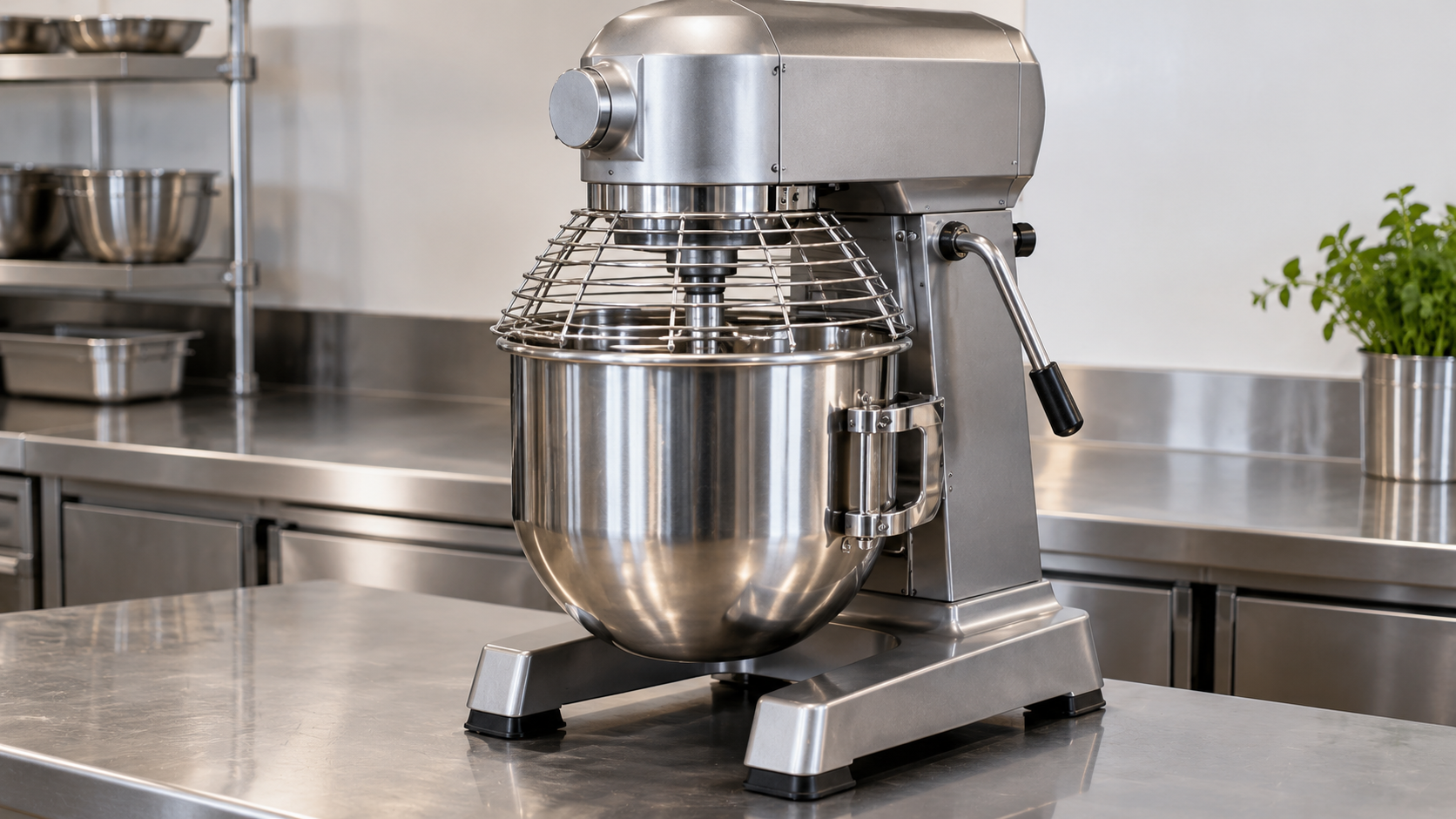
Hypothetical example: A bakery replaces a damaged mixer component. The technician confirms the repair and supplies the work report, but production wants to restart while an old retaining clip is still unaccounted for. The equipment running normally does not answer where that clip went or what surfaces were exposed.
On a small screen, swipe sideways to view all columns.
If food was present during the fault or repair, assess it separately under the business’s incident arrangements. The example does not provide a disposal, rework or release method. It shows why the repair completion time and the production restart time may be different.
Manage unfinished or temporary work
An unresolved defect needs a visible status and owner. Do not allow a temporary arrangement to become an unrecorded permanent repair. Before any proposed interim use, obtain the appropriate assessment of technical safety, food suitability, cleaning, materials and operating restrictions. Record an actual decision, not a blanket permission that temporary repairs are acceptable.
Where uncertainty could affect food safety, keep the equipment out of that use until the issue is resolved through the responsible process. If potentially affected food has already been handled or supplied, use the applicable incident, notification and recall arrangements. A return-to-service signature does not decide the disposition of earlier product.
Review repeated breakdowns and recurring hygiene difficulties. They may indicate that the maintenance schedule, replacement plan, design or operating procedure needs attention. The commercial kitchen requirements guide provides broader premises context; the purpose here is the specific handover after work.
Before-restart checklist
- The equipment, work performed and affected area are clearly identified.
- The maintenance provider’s relevant completion information and limitations are available.
- Tools, parts, consumables and waste are accounted for, with discrepancies resolved or escalated.
- Required cleaning and sanitising has been completed using suitable methods.
- Relevant settings, measurements and food-control checks meet the actual acceptance criteria.
- Potentially affected food is managed separately through the applicable incident process.
- The authorised person has recorded the equipment-use decision and any follow-up, with no unresolved material question hidden by a tick.
Frequently asked questions
Get help improving the record
AFVA food safety and quality consulting includes practical support with maintenance records, procedures and corrective actions. Share the current form, a typical work report and the handover problem you want to solve. A food consultant can help organise food-safety responsibilities; specialist repair and machinery-safety decisions remain with the appropriate competent people.
Need practical support? Contact AFVA for free initial guidance and describe the equipment, food activities and record you want to improve.
General information only. Follow your applicable food-safety programme, equipment instructions and safe-work procedures. This article is not engineering advice, a machinery-safety inspection, a cleaning validation or authority to release potentially affected food.
Need Practical Food Safety Support for Your Business?
Contact us for free initial guidance. We provide practical, plain-English food safety support for New Zealand food businesses across all service areas.
This article provides general information only and is not a substitute for professional advice specific to your situation. Contact us for guidance based on your actual food activities and requirements.