
Need help with a food-sample handover? Review our shelf-life testing and laboratory-coordination support or contact AFVA for free initial guidance.
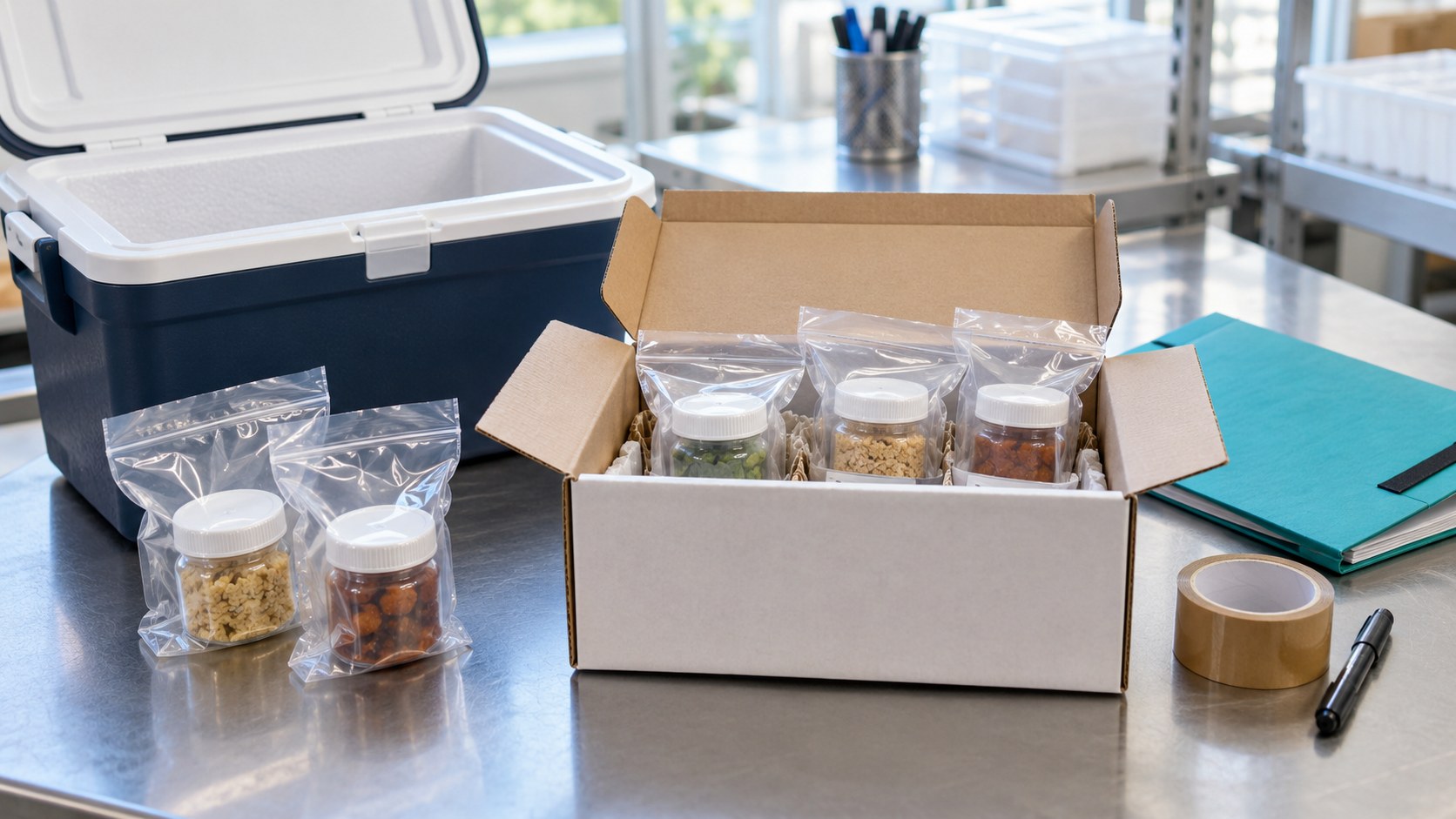
Food sampling chain of custody in NZ is a practical question before a test order leaves the site: can the laboratory connect each received sample with the food you intended to submit? A courier tracking number identifies a parcel. It does not, by itself, identify every sample inside it or establish how the food was handled.
This guide helps a food business prepare a traceable handover for routine laboratory work. It is not an official sampling protocol, a forensic evidence procedure or a replacement for a product-specific sampling plan. Where a regulator, customer programme or laboratory specifies a process, agree and follow that process.
Quick answer: Agree the submission instructions first. Give each sample a stable identity, connect it to the product and collection event, and preserve the record through storage, dispatch and laboratory receipt. Record what happened, including deviations; do not turn an undocumented assumption into a handling record.
Agree the handover before collecting food samples
Start with the decision the testing is intended to support. Name the product, batch or defined material, the requested analyses and the point at which the sample will be taken. Ask the laboratory for its current instructions covering the container, amount, preparation, storage, transport and timing. Do not choose those details from a generic checklist.
As a local example, AsureQuality’s sample-submission guidance connects the product or sample details and requested tests with laboratory registration. The useful lesson is to make the physical sample and its submission information agree. Use your chosen laboratory’s actual form or system, rather than inventing a substitute it has not accepted.
Clarify whether units stay separate or whether any combining, opening, freezing or other preparation is permitted. Identify who will collect the sample and who can resolve a question if the laboratory calls. A well-completed transfer sheet cannot repair an unsuitable sampling design.
Give each sample a usable identity
Use one reference that remains consistent on the container, submission, internal register and later report. Keep the product batch separate from the sample reference: several samples can come from one batch, and they may represent different locations, packs or collection times.
The CFIA’s technical sampling guidance explains why sample labels need to connect results with the material assessed and why collection and shipping should protect sample integrity. It is Canadian guidance, not a statement of New Zealand legal duties. The record below is AFVA’s practical way to organise that handover.
Check the identification before sealing and packing. If a reference is corrected, retain a clear explanation connecting the old and corrected entries. Do not silently relabel a sample after dispatch to make it fit a desired batch. Photographs can help explain packaging or labels, but they do not replace the laboratory’s required identifiers.
Keep a concise sample transfer record
Use these recommended fields alongside the laboratory’s instructions. An existing submission form may already capture several of them; cross-reference it rather than producing conflicting copies. Add only fields that the intended work needs.
On a small screen, swipe sideways to view all columns. Keyboard users can focus the table region to scroll horizontally.
Keep planned conditions separate from observations. “Transport chilled as instructed” describes a requirement; it is not proof that a particular temperature was maintained. If there was no logger or receipt measurement, say what evidence is available and what was not recorded. Protect personal and commercially sensitive information when sharing the record.
Close the gap between dispatch and laboratory receipt
Check the receiving location and arrangements before sending. AsureQuality’s testing-process overview describes appropriate transport temperature and registration on arrival. Those steps do not supply one universal delivery temperature, sample size or holding time for every food and analysis.
Before the parcel leaves, reconcile the number of labelled containers with the submission. Preserve the dispatch time and consignment details. If the courier is delayed, a container leaks or an identifier does not match, tell the laboratory promptly and retain its response. Do not decide that the sample is acceptable merely because the parcel was delivered.
Ask the laboratory to connect its assigned reference with your sample references and flag any relevant receipt concern. When the report arrives, check those references before filing it against the product. A receipt acknowledgement, completed analysis and a conclusion about the product are different things.
If results already disagree or handling history is uncertain, use the separate guide to investigating inconsistent shelf-life results. It addresses retrospective investigation; this article focuses on preventing gaps in the next handover.
Before-dispatch checklist
- The laboratory has confirmed the intended work and current submission instructions.
- Sample references match containers, product/batch details and the submission.
- Collection and holding entries describe actual events, with missing information visible.
- The receiving location, delivery arrangements and contact for problems are clear.
- Container counts, dispatch time and the courier or personal handover are recorded.
- Someone is responsible for matching laboratory receipt and final report references.
Common mistakes include copying a previous job without checking its instructions, calling the batch number the sample identifier, recording a target as a measured result, and treating tracking as complete custody evidence. Avoid recreating missing entries later as though they were recorded at the time.
Frequently asked questions
Is this an official chain-of-custody form?
No. It is an editorial handover framework. Use any prescribed or laboratory-agreed process for the actual purpose, particularly where formal evidence or a regulated sampling programme is involved.
Must every sample travel chilled?
This guide does not prescribe a temperature. Ask the laboratory for instructions suited to the food and analysis; do not freeze or otherwise alter a sample simply to make delivery easier.
Does good paperwork make the sample representative?
No. Representativeness depends on the sampling plan and collection. A clear record describes the submitted material; it does not establish that one sample represents an entire batch.
What if a record is missing?
Identify the gap, retain available evidence and ask the laboratory or technical reviewer what it means for the intended use. Do not manufacture a signature, time or measurement.
Can AFVA issue the laboratory result?
The scope described here is planning, coordination and documentation support. Laboratory analysis and its report belong to the laboratory; agree the specific AFVA consulting scope before work starts.
How AFVA can help organise the handover
AFVA’s verified shelf-life support includes sampling plans, laboratory coordination, result review and documentation. Bring the product description, test purpose, proposed sample list and the laboratory’s instructions when discussing support. The aim is a handover people can use, with its limits visible; it is not a promise of an acceptable test result or product approval.
Sources and scope
Sources were read on 1 November 2026. The practical worksheets in this article are AFVA recommendations, not regulator-issued forms.
- AsureQuality: manual sample submission — A New Zealand laboratory example of information needed to register samples; follow your chosen laboratory’s process.
- AsureQuality: food laboratory testing process — Submission, suitable transport conditions and laboratory receipt/registration; not a universal shipping specification.
- Canadian Food Inspection Agency: sampling procedures — Technical context on sample identity and protecting samples during collection and shipping. Canadian guidance is not New Zealand law.
- AFVA shelf-life testing support — Verified scope for sampling-plan support, laboratory coordination, result review and documentation.
Need practical support? Contact AFVA to discuss the appropriate next step for your food business.
General information only. Sampling requirements depend on the product, purpose, methods and applicable programme. This recommended record is not a validated collection procedure, laboratory acceptance decision or product-release authorisation.
Need Practical Food Safety Support for Your Business?
Contact us for free initial guidance. We provide practical, plain-English food safety support for New Zealand food businesses across all service areas.
This article provides general information only and is not a substitute for professional advice specific to your situation. Contact us for guidance based on your actual food activities and requirements.