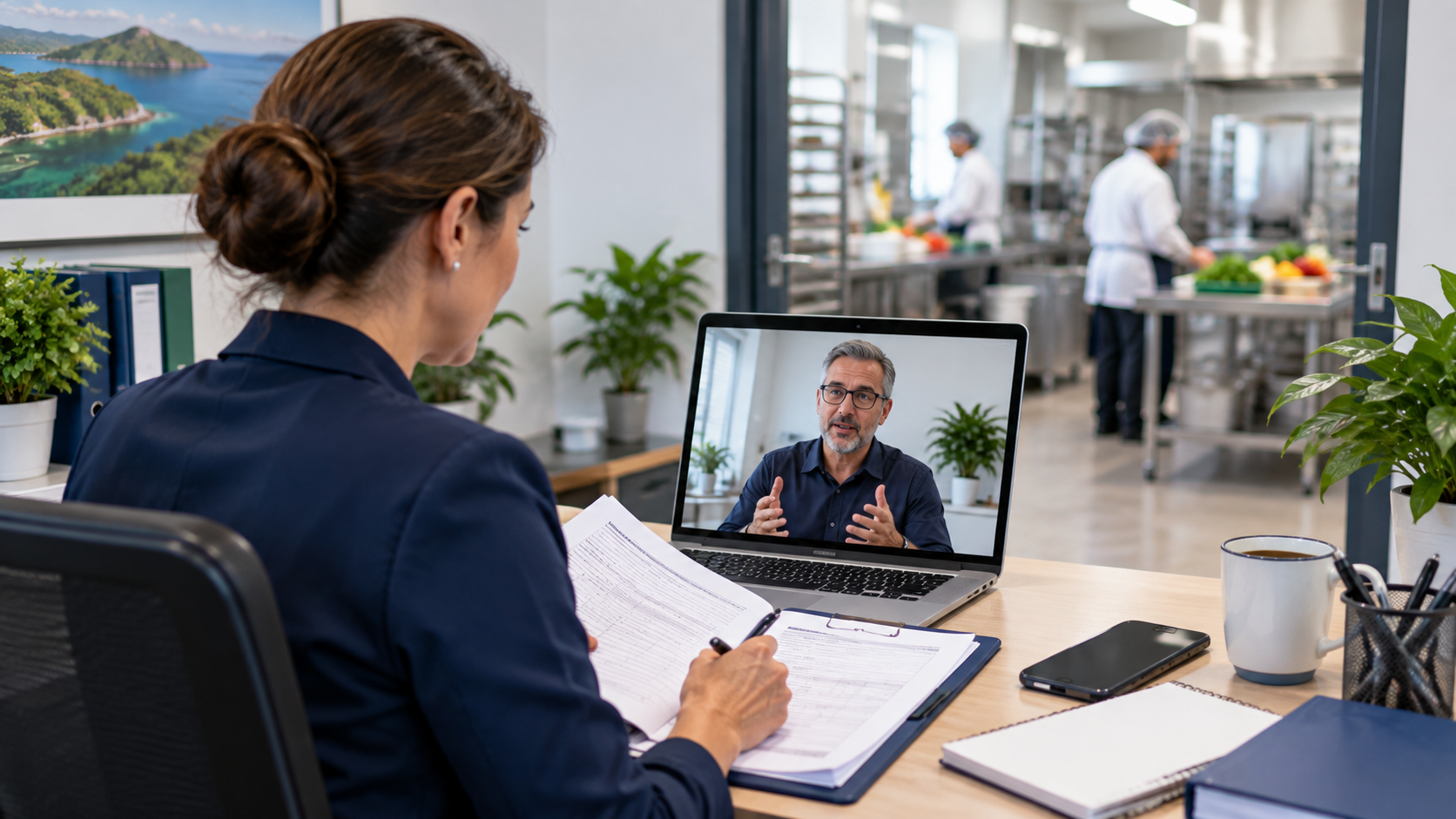
If travel, multiple sites, or scheduling around a busy kitchen makes an on-site verification difficult to arrange, remote verification may be an option worth understanding. This guide covers how it actually works in New Zealand, which businesses it suits, and how it compares to a traditional on-site visit.
What Is Remote Food Safety Verification?
Remote verification is a way of carrying out some or all of a verification visit without the verifier being physically on-site the entire time — typically combining document review, photo or video evidence, and online meetings, with an on-site component only where it's genuinely needed. It isn't a lower standard of verification; it's a different delivery method for reaching the same outcome.
How Does Remote Verification Actually Work?
Document and Record Review
Your food safety records, monitoring logs, cleaning schedules and other documentation are reviewed digitally ahead of or during the verification, rather than only flicking through paper files on the day.
Photo and Video Evidence
Depending on what's being assessed, you may be asked to provide photos or a video walkthrough of your premises, equipment, and how specific procedures are carried out in practice.
Online Meetings
A video call with your verifier to discuss your processes, answer questions, and clarify anything that isn't clear from documents and footage alone.
Any Required On-Site Follow-Up
For some registration types or specific circumstances, a degree of on-site presence may still be required — remote verification often means reducing the on-site component significantly rather than eliminating it entirely, depending on your specific situation.
Who Is Remote Verification Suited To?
- Businesses outside major centres, where travel time and cost for an on-site verifier is significant
- Multi-site operators who want a more efficient way to coordinate verification across several locations
- Businesses with a strong existing compliance history, where a lighter-touch approach may be appropriate
- Anyone needing more flexible scheduling around business operating hours
It's not automatically suited to every business or every registration type — some situations genuinely call for a full on-site visit, particularly where physical premises, equipment or processes need to be seen directly to be properly assessed.
Remote vs On-Site Verification — What's the Difference?
The core difference is delivery method, not standard. An on-site verification lets the verifier observe your actual environment, equipment and practices directly and in real time. Remote verification substitutes some of that direct observation with documentation, imagery and discussion — which works well for many businesses, but depends on you being able to provide clear, honest and complete evidence, since the verifier isn't there to independently notice something you didn't think to show them.
Is Remote Verification Accepted for My Registration Type?
Whether remote verification is available — and to what extent — depends on your specific registration (Food Control Plan, National Programme level, or RMP) and your registration authority's current policy. This is worth confirming directly rather than assuming, since it can vary and may change over time.
How to Prepare for a Remote Verification
- Organise your records digitally in advance — scanned or photographed clearly, not a pile of paper you'll photograph on the day
- Test your video call setup beforehand so technical issues don't eat into your verification time
- Prepare a walkthrough video or photos of key areas and equipment if requested, well-lit and clearly showing what's being asked for
- Brief your staff — they may be asked questions during the video call, just as they would in person
How Access Food Verification & Auditing Can Help
We offer remote verification for eligible New Zealand food businesses, combining document review and online meetings with any necessary on-site follow-up. This sits alongside our standard National Programme verification and Food Control Plan verification services — if you're not sure whether remote verification applies to your registration type, we're happy to check and explain your options before you commit to anything.
Frequently Asked Questions
Is remote verification a lower standard than on-site verification?
No — it's a different delivery method aimed at reaching the same verification outcome, not a reduced one. Whether it's appropriate depends on your specific business and registration type.
Does remote verification cost less?
This depends on your provider and circumstances — reduced travel can be a factor, but cost isn't the main reason to consider it; suitability for your situation is.
Can I switch between remote and on-site verification in future?
Generally yes, depending on your registration authority's policy at the time — it's not necessarily a permanent choice, and can be reviewed at your next verification.
Contact us for free initial guidance on whether remote verification suits your business, or explore our remote verification service in full.
Need Practical Food Safety Support for Your Business?
Contact us for free initial guidance. We provide practical, plain-English food safety support for New Zealand food businesses across all service areas.
This article provides general information only and is not a substitute for professional advice specific to your situation. Contact us for guidance based on your actual food activities and requirements.