
Considering a packaging change? Explore AFVA’s new food product development support or contact AFVA for initial guidance on the food safety review and evidence your project needs.
Choosing vacuum packaging or modified atmosphere packaging (MAP) is a product-development decision, not simply a choice between two machines. A pack that improves presentation or reduces spoilage still needs to suit the food, manufacturing process, storage and distribution conditions.
This guide helps New Zealand food manufacturers and brand owners prepare a packaging-change brief before commissioning a trial or committing to a system. It focuses on the unopened food and pack. For a wider development project, use the food product development consultant briefing guide alongside this more specific assessment.
Quick answer: Vacuum packaging removes air from a pack; MAP replaces the atmosphere with a gas mixture. Neither method, by itself, eliminates harmful microbes or establishes a longer shelf life. Choose by reviewing the actual food, proposed pack and sealing system, hazards, storage conditions and supporting evidence. A supplier’s successful application elsewhere is a starting point for questions, not proof for your product.
Start with the product and the change
Write down the current product and the result you want. Is the objective less pack collapse, a different presentation, reduced oxidation, a distribution change or a longer proposed life? Separate commercial targets from conclusions already supported by evidence.
Describe the recipe and process versions, whether the food is ready to eat, intended consumers, pack sizes and storage conditions. Then identify exactly what would change: material, tray or pouch format, closure, atmosphere, filling or sealing equipment, handling, or distribution. Keeping the formulation unchanged does not establish that the new packaging is equivalent.
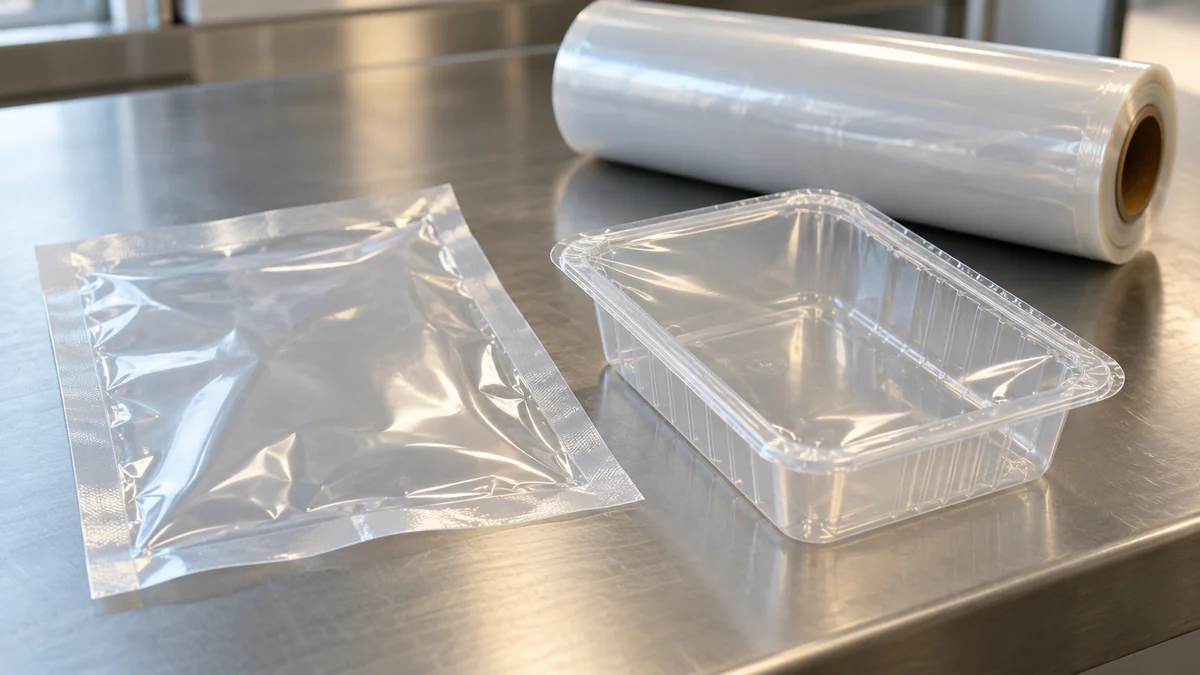
For example, a business considering a lidded tray in place of a pouch should ask which existing evidence remains relevant and which conclusions need review. This is an illustrative planning question, not a recommendation that either format is suitable for a particular food.
What vacuum and MAP change
MPI’s guidance on modified atmosphere and vacuum packaging explains the basic distinction and its limitations. MAP is not necessarily oxygen-free: oxygen, carbon dioxide and nitrogen are among the gases used. This article does not prescribe a mixture or operating settings.
On a phone, swipe sideways to read all columns. Keyboard users can focus the table region to scroll horizontally.
Both approaches can help preserve quality or slow some spoilage processes in suitable applications. Neither makes every product suitable for ambient storage. A pack that looks acceptable is also not a reliable demonstration that the food is safe.
Review hazards before selecting settings
MPI warns that these methods do not eliminate harmful microbes and can encourage some to grow. Its vacuum-packaging guidance specifically identifies Clostridium botulinum. It also explains that normal spoilage signs may be absent even when food is unsafe.
The practical response is to review the hazards and controls for the proposed combination, rather than treating reduced oxygen as a safety step. Ask a competent technical adviser which hazards matter for the food and process, what controls are needed, and what evidence demonstrates their effectiveness. Include preparation, packing, storage and foreseeable distribution conditions in that discussion.
Most fresh and minimally processed foods packaged using vacuum or MAP still require refrigeration, according to MPI. Do not remove or relax existing storage controls because a new pack appears more protective. Agree the product-specific conditions and associated instructions before release.
Keep appearance and safety separate. A trial can investigate pack presentation, seal performance and quality. Those observations do not, on their own, validate microbiological safety or a proposed shelf life. Do not taste suspect trial food or improvise deliberate-contamination studies from this guide.
Ask for pack and equipment evidence
MPI’s food packaging rules and guidance explains that packaging must be fit for purpose and suitable for the food and conditions of use. It recommends obtaining relevant supplier information. A general “food grade” description should lead to a more specific discussion about your intended use.
Use the following worksheet to organise that discussion. These are recommended briefing questions, not a compulsory test panel, a machine-setting specification or proof that every listed test is needed. Ask the supplier and technical reviewer to identify the evidence appropriate to the project.
On a phone, swipe sideways to read all columns. Keyboard users can focus the table region to scroll horizontally.
Record gaps rather than filling them with assumptions. If the supplier’s report covers another material, food, temperature or closure, ask whether it applies and why. Equipment capability and material specifications also need to be considered together: neither describes the whole packed product.
Reassess shelf life and storage
MPI’s packaging guidance says a packaging change can affect shelf life and that the stated life needs to remain supported. Do not carry the current date across automatically, or adopt the duration used by a competitor with an apparently similar pack.
Begin with a review of existing evidence. Identify the formulation, process, pack and storage conditions each report covers. Ask which information remains applicable, what has changed, and what additional assessment is needed. A proposed commercial duration should remain a target until its basis has been reviewed.
Where a study is needed, agree its purpose and design with the technical adviser and appropriate laboratory. Clarify product and pack versions, conditions, responsibilities, acceptance criteria and how results will be interpreted. This guide does not supply a universal sampling plan, temperature, gas ratio or number of days.
AFVA’s shelf-life planning and laboratory coordination support can help organise the question and review the available information. Where laboratory analysis is required, it is performed by an appropriate external laboratory.
Keep the unopened assessment separate from instructions after opening. If the new pack changes repeated use or reclosure, prepare that additional question using the guide to supporting shelf life after opening. An intact-pack conclusion should not silently become an opened-pack instruction.
Check the food-plan change pathway
For businesses operating under a food control plan, clause 3.1 of the current Food Notice: Requirements for Food Control Plans and National Programmes sets criteria for significant amendments. These include relevant changes to scope or procedures that may affect food safety and suitability, new or adversely affected risk factors, and major equipment changes. The clause also contains exceptions, including a documented assessment route for certain similar foods or procedures.
The Notice’s accompanying guidance distinguishes registering a significant amendment from notifying a non-significant amendment; a significant change to a custom plan may also require evaluation. Do not classify every packaging substitution as significant, or assume that an unchanged recipe makes it minor. Check the actual proposal and the applicable route with the appropriate registration authority.
The name of a packaging method does not determine the business’s regulatory pathway. If the operation is covered by another programme or legislation, check that pathway’s requirements. This packaging review is consulting support; it is not registration, recognised evaluation or verification.
Prepare a controlled trial brief
Before ordering trial material or scheduling equipment time, we recommend bringing the following into one version-controlled brief:
- The decision: the specific commercial objective and questions the trial must answer.
- The baseline and candidate: exact product, process, material, pack and equipment versions, with proposed conditions clearly identified.
- The evidence review: applicable supplier information, existing studies, hazard assessment and remaining gaps.
- The trial plan: responsible people, agreed observations or assessments, acceptance criteria and how deviations will be recorded.
- Trial-stock control: identification, handling and disposition arrangements so experimental stock is not inadvertently treated as released product.
- The release decision: who reviews the results, resolves outstanding actions and authorises any commercial change, including required plan updates and instructions.
Keep the outcome specific. “Further evidence required” can be a useful result if it identifies the missing question and action owner. A visually successful demonstration does not require you to treat the product as ready for commercial release.
Common mistakes before switching
- Choosing settings before defining the food: establish the product, hazards and intended conditions first.
- Relying on another application: check the scope and limitations of supplier examples or existing reports.
- Changing the pack but retaining every assumption: review the date, storage, sealing and handling conclusions affected by the change.
- Buying equipment before agreeing the evidence: define the compatibility questions and deliverables before committing.
Frequently asked questions
Is vacuum packaging better than MAP?
There is no universal winner. The useful comparison is which system suits the actual food, manufacturing arrangements and intended distribution, and what evidence supports that conclusion. Agree safety and performance criteria before comparing proposals.
Does MAP mean there is no oxygen in the pack?
No. MPI identifies oxygen among the gases used in modified atmospheres. The appropriate atmosphere is product-specific; this guide does not recommend a mixture or equipment setting.
Can vacuum or MAP make a chilled food shelf stable?
Do not infer ambient suitability from the packaging method. MPI states that most fresh and minimally processed foods using these methods still need refrigeration. Any proposed change to storage needs its own appropriate technical basis.
Can we keep the existing shelf life when we change packaging?
Ask for an assessment of whether the existing evidence still applies. The answer depends on the actual change and the basis of the current conclusion. Neither an automatic extension nor an automatic fixed testing programme follows from the method name.
Does every packaging change need a new food control plan registration?
No universal answer applies. For an existing food control plan, assess the actual amendment against the current Notice, including its exceptions. Confirm the registration or notification route with the appropriate authority rather than deciding from the packaging description alone.
What should we send AFVA first?
Send a concise product and packaging-change brief, available supplier specifications, proposed storage and distribution conditions, relevant reports and the decisions you need help resolving. Identify assumptions and missing information so an appropriate consulting scope can be agreed.
Discuss the packaging decision with AFVA
AFVA’s published new product development scope includes process, packaging and storage review, shelf-life planning and practical food safety support. Agree whether the immediate need is an evidence-gap review, a trial brief, shelf-life planning or another defined task. Do not assume this includes operating a packaging line, manufacturing, laboratory analysis or official approval.
For a focused starting point, contact AFVA about your proposed packaging change with the current and candidate pack details and the questions still unresolved. The business remains responsible for food safety, suitability and compliance.
General information only: Requirements and suitable controls depend on the actual food, process, packaging, intended use and business pathway. This article is not a process specification, gas recipe, shelf-life validation or approval to manufacture or sell a product. Use current official guidance and competent product-specific advice.
Need Practical Food Safety Support for Your Business?
Contact us for free initial guidance. We provide practical, plain-English food safety support for New Zealand food businesses across all service areas.
This article provides general information only and is not a substitute for professional advice specific to your situation. Contact us for guidance based on your actual food activities and requirements.