Whether you're setting up a new food business or reviewing your current practices, one question comes up constantly: what food safety training does your team actually need in New Zealand? This guide covers what's required, who needs it, and how to choose a training provider that actually prepares your staff rather than just ticking a box.
Is Food Safety Training a Legal Requirement in New Zealand?
There's no single nationwide law that names a specific certificate every food worker must hold. Instead, the requirement is built into your registration itself: whether you operate under a Food Control Plan, a National Programme, or a Risk Management Programme (RMP), you're required to demonstrate that staff have the skills and knowledge to carry out food safety practices correctly. In practice, that means documented training is expected — and a verifier will usually ask to see evidence of it.
What Should Food Safety Training Actually Cover?
The right content depends on your specific operation, but most New Zealand food businesses need to cover:
Basic Food Handling
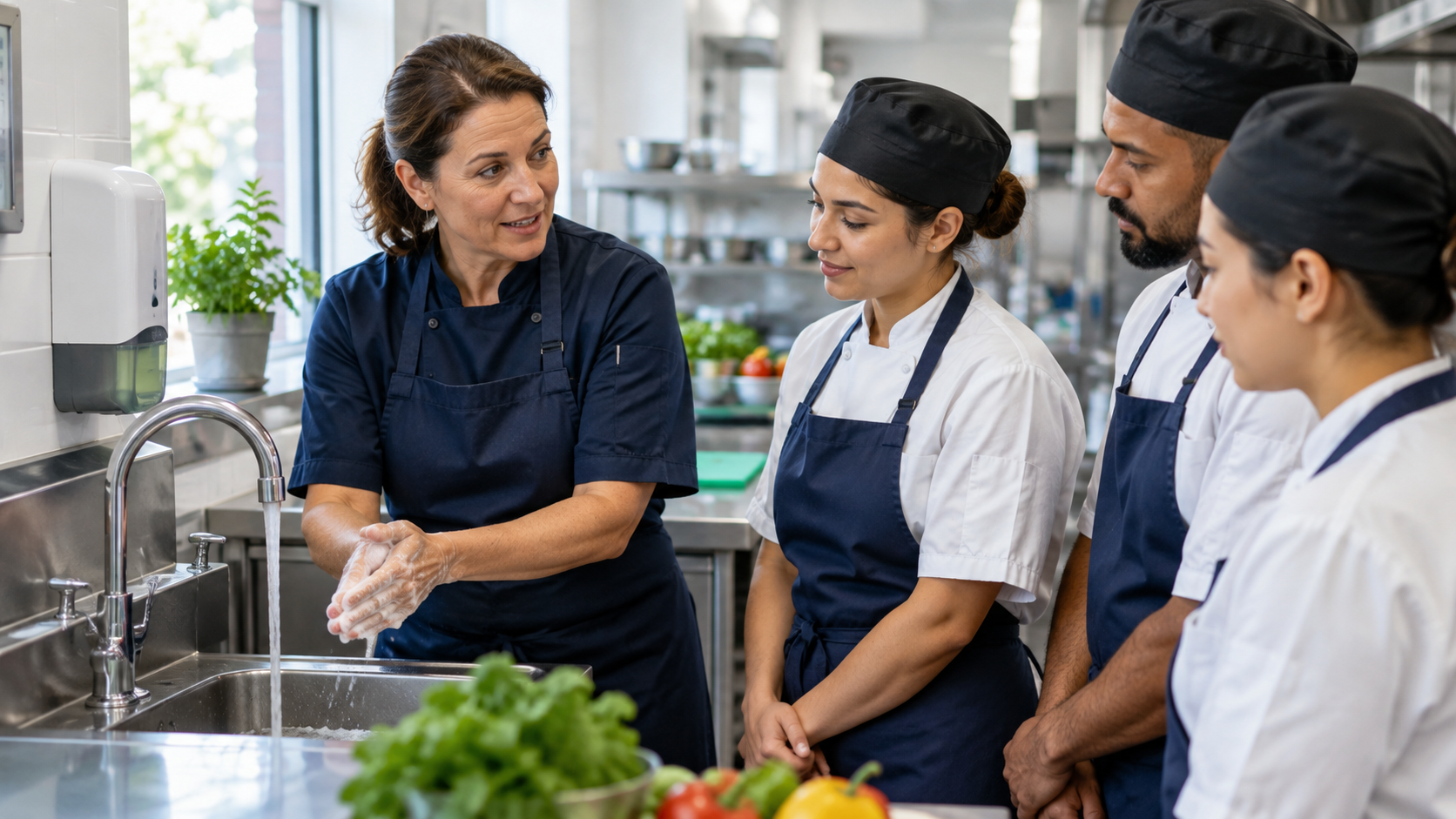
Personal hygiene, handwashing, safe handling of raw and cooked food, and avoiding cross-contamination between different food types.
Allergen Awareness
Recognising the common allergens under New Zealand labelling requirements, understanding cross-contact risk, and knowing how to answer customer questions about allergens accurately.
Temperature Control
Safe cooking, cooling, chilling and hot-holding temperatures, and what to do when something falls outside the safe range.
Cleaning and Sanitising
Correct use of cleaning chemicals, sanitising contact surfaces, and following your documented cleaning schedule.
Your Specific Food Control Plan or HACCP Requirements
Beyond general food safety knowledge, staff also need to understand the specific critical control points, monitoring steps and corrective actions written into your business's own plan — this part can't be covered by generic training alone, since it's unique to your operation.
Who in Your Business Needs Training?
- Anyone directly handling food — kitchen staff, food preparers, servers who handle open food
- Supervisors and managers — typically need a deeper understanding, since they're responsible for oversight and corrective action
- New staff — should be trained before or very soon after starting, not left until the next scheduled session
- Everyone, periodically — refresher training keeps knowledge current, especially after any changes to your plan or process
Generic Training vs Business-Specific Training
It's worth understanding the difference between the two, because most businesses need both:
- Generic food safety training covers universal principles — hygiene, temperature, allergens, cleaning — and can be delivered by an external provider or an online course.
- Business-specific training covers your actual Food Control Plan, National Programme requirements, or HACCP plan — the specific critical control points and procedures unique to your operation. This needs to be delivered by someone who understands your actual plan, often as part of onboarding or ongoing consulting support.
How to Choose a Food Safety Training Provider in New Zealand
- Relevant to your sector — training aimed at hospitality won't fully cover the needs of, say, a manufacturer or exporter
- Understands the NZ regulatory context — not generic international content dropped into a local course
- Provides documentation — records and certificates you can show a verifier, not just a one-off session with no paper trail
- Can also cover your business-specific plan — either directly, or by working alongside whoever wrote your Food Control Plan or HACCP plan
How Access Food Verification & Auditing Can Help
We provide food safety training and workshops for New Zealand food businesses, covering both general food safety knowledge and training tailored to your specific Food Control Plan, National Programme, or HACCP requirements. This pairs naturally with our food safety and quality consulting and HACCP consulting services if you're building or updating your plan at the same time as training your team.
If you're not sure what level of training your business needs, contact us for free initial guidance — we'll help you understand what applies before recommending anything.
Frequently Asked Questions
Do I need a specific certificate for every staff member?
There isn't one universal mandatory certificate in New Zealand, but you do need to be able to demonstrate staff have adequate food safety knowledge and training — documented evidence matters at verification.
How often should refresher training happen?
This depends on your business and any changes to your plan or process, but periodic refreshers — rather than a single one-off session at hiring — are generally expected as part of maintaining an effective food safety culture.
Can online training cover everything I need?
Online courses can cover general food safety knowledge well, but they can't cover the specific details of your own Food Control Plan or HACCP plan — that part needs training tailored to your actual documented procedures.
Contact us for free initial guidance on food safety training, or explore our full training and workshops service.
Need Practical Food Safety Support for Your Business?
Contact us for free initial guidance. We provide practical, plain-English food safety support for New Zealand food businesses across all service areas.
This article provides general information only and is not a substitute for professional advice specific to your situation. Contact us for guidance based on your actual food activities and requirements.