
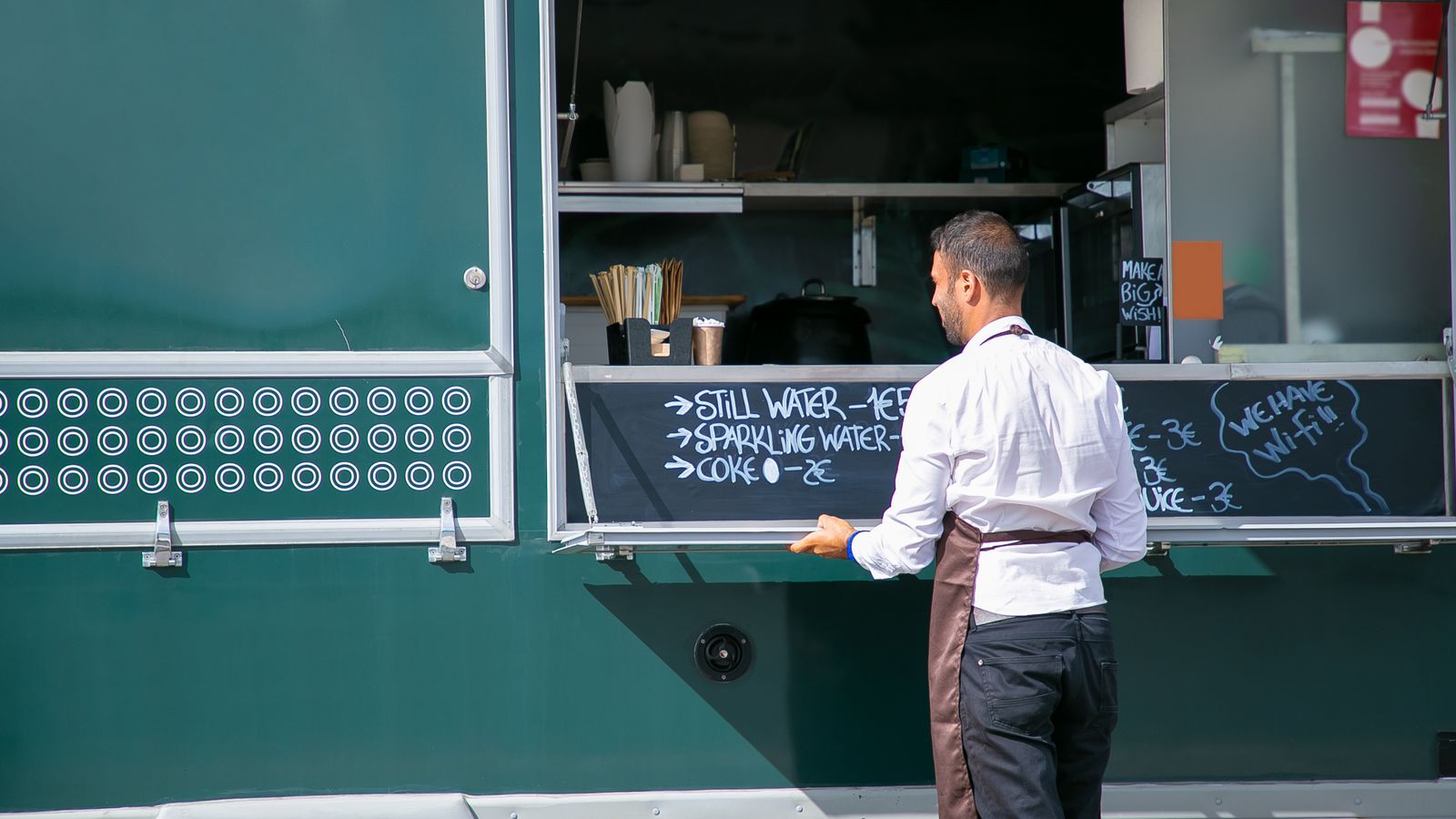
Preparing your food truck for a verification visit? Explore AFVA’s food safety audit preparation support or contact AFVA for free initial guidance. Describe your registered activities, where preparation happens and the visit you need to arrange.
Food truck verification in NZ needs to reflect the operation behind the service window: suppliers, preparation or storage at a base, transport and service. A useful visit plan makes those connections clear.
This guide helps mobile operators arrange the truck, people and evidence for the visit after establishing their applicable Food Control Plan (FCP) or National Programme. It does not replace registration or prescribe identical records for every truck.
Quick answer: Confirm the appropriate verifier and your actual due date, then agree where and when the visit will take place. Explain every preparation and storage location, make the relevant work and people available, and organise records that show how your controls operate. A tidy truck and a folder of blank forms do not, by themselves, demonstrate effective food safety management.
Confirm the verifier, purpose and due date
Check the registration and latest verification correspondence: legal operator, plan or programme, activities, locations, responsible person, and whether this is an initial or later verification. Tell the provider about relevant changes or unresolved questions.
Provider choice is conditional. MPI’s food business verification guidance explains that a Simply Safe & Suitable template-FCP business operating in one council region and selling mainly directly to consumers is verified through its council. Other listed routes can use a provider with the appropriate recognition. Confirm the arrangements applying to your operation before booking.
An engagement letter used for registration is different from verification of the operating business. MPI requires a confirmed verifier’s letter with National Programme and custom-FCP applications; it is not a certificate that the truck has passed a verification. Our food business verification process guide explains the broader stages.
Check the deadline for your actual route
For a new business, the Food Regulations set initial verification within six weeks of registration for a template FCP or National Programme 1, 2 or 3. A new custom-FCP business has a three-month period under regulation 87. These are registration-based periods, not a timetable that starts whenever the truck first attends a market. See the initial-verification provisions in regulations 87, 88 and 91–93 and confirm the date applying to your registration.
If timing may be a problem, act early. Regulation 94A allows a new-business operator to request an extension from the registration authority, with reasons, no later than two weeks before the due date. An extension is conditional and cannot run beyond six weeks after the original due date. Read the extension conditions rather than assuming a delayed opening or a difficult booking automatically changes the deadline. For an existing business or a return visit, confirm the applicable timetable separately.
Agree the truck and base arrangements
Describe where food travels and where each step happens. Distinguish the business address, truck’s trading location and separate preparation, storage or washing-up premises. A booking saying only “food truck at the Saturday market” can leave important work unexplained.
Ask which locations, activities and evidence the verifier needs to assess and agree practical arrangements. This does not mean every business needs the same number of visits. It means the provider should have accurate information to decide what is appropriate for the registered operation.
On a small screen, swipe sideways to view all columns.
If preparation is in a home or shared kitchen, describe that location accurately. Do not assume it is automatically unacceptable or that the truck’s registration necessarily covers everything done there. Resolve scope and premises questions with the appropriate authority and provider. Our food business registration guide provides the wider registration context.
Make normal food-handling work understandable
Ask how the visit can reflect the work you actually do. Explain the menu, preparation sequence, delivery pattern and service period. Tell the verifier if cooking, cooling, packing or cleaning happens at another time or location; do not invent a demonstration simply to make the visit look complete.
Follow one real ingredient through receipt, base storage, preparation, loading, transport, truck storage and service. At each handover, identify responsibility, applicable controls and their evidence. Use your actual plan or programme rather than adding irrelevant controls.
Practical checks may include whether equipment is working, the handwashing arrangement is available, food and chemicals are separated, water and waste arrangements match the operation, and relevant monitoring equipment is accessible. These are preparation prompts, not a substitute specification for your truck. The applicable requirements determine what must be in place.
Agree how observation and questions can occur without compromising safe service. Explain processes that cannot be observed and agree any appropriate demonstration or other evidence with the verifier. Do not present a staged activity as normal practice.
Prepare the people and relevant records
Arrange for the person responsible for the business and someone who understands the day-to-day food work to be available. In a small operation this may be the same person. If recipes, purchasing or base-kitchen preparation are managed by someone else, establish how that person can answer relevant questions.
Staff should be able to explain their own work, where instructions are kept and what they do when a check is outside the required limit. Give a practical refresher using the real procedures. Memorised answers are less useful than showing a consistent process and an honest response to a problem.
Build a short evidence index. Keep the current applicable plan or programme information, registration details and previous findings easy to retrieve. Then identify the records relevant to the food activities being assessed. Depending on the operation, these may include receiving, storage, temperature or process checks, cleaning, staff training, ingredient and allergen information, traceability and corrective actions.
MPI’s Verification topics guide identifies five topics checked at every verification: registration/scope, improvements and corrective actions, complaints and recalls, non-compliance, and managing unsafe or unsuitable food. Have the relevant history available. Where no incident has occurred, explain the arrangements without manufacturing entries.
Do not treat that list as a rule that every truck needs every form. Nor should you assume a record is unnecessary because the operation is small. Follow the actual requirements. If the business is under NP1, the first National Programme 1 verification guide gives programme-specific preparation detail.
Check that authorised staff can retrieve digital records, and check charging and connectivity at the site. A controlled offline copy may help where reception is unreliable; use the current version and protect personal or commercially sensitive information.
For menu information, connect the dishes served to current recipes and supplier ingredient details. If an ingredient changes, update the affected information and staff handover. The menu allergen records guide covers that specific change process. Do not infer that an empty matrix cell proves a dish is suitable for a customer.
Use a practical mobile-visit checklist
AFVA recommends this short handover checklist to organise the appointment. It is not an official MPI form or a separate approval.
- Confirm the appointment: provider, purpose, applicable due date, start time, likely arrangements and the information requested in advance.
- Describe the whole operation: truck, preparation and storage locations, food flow, current menu and any relevant change since the last verification.
- Resolve access: exact addresses, vehicle location, parking, event entry, keys and a contact who can respond if plans change.
- Make relevant people available: day-to-day operator, person responsible for records and anyone needed to explain preparation elsewhere.
- Check the evidence index: current documents, usable records, previous findings and actions, with a clear way to retrieve digital information.
- Check readiness honestly: working equipment and applicable facilities, normal food-handling arrangements, known gaps and the action being taken.
For example, a truck may prepare ingredients at a shared kitchen and assemble orders at an evening event. The useful handover identifies both stages, the people responsible and the records linking them. It does not assume that inspecting the parked vehicle answers every question about preparation. This is an illustrative planning example, not a classification or approval of that business.
Handle questions and follow-up clearly
Use the visit to show what happens in practice. If a record is missing, identify the gap rather than filling it in retrospectively as though the check occurred. Explain what is known, what immediate action was taken where relevant and what needs to change.
At the end, make sure you understand any findings, required actions, evidence expected and applicable timeframes. Clarify a point you do not understand. Keep the report with the related action record so the person completing the work can see the issue and what would demonstrate it has been addressed.
Assign action owners and retain genuine close-out evidence. A revised form alone may not show that a process is being followed. Clarify review and any further verification with the verifier. Preparation does not guarantee a pass.
Avoid common preparation mistakes
- Treating verifier confirmation for registration as a completed verification of the operating truck.
- Booking only a vehicle location while omitting a separate preparation or storage base.
- Assuming every template-FCP business can choose any independent provider.
- Using another truck’s first-verification deadline or assuming that opening later resets the clock.
- Presenting a large folder of blank templates instead of usable evidence of the actual work.
- Keeping records on a device or account that nobody at the visit can access.
- Hiding a menu, process or location change because the registration certificate has not expired.
Frequently asked questions about food truck verification
Discuss the support you need
AFVA provides food safety audit preparation support, including practical review of procedures, records, staff preparation and evidence. Send a concise brief with your council area, registered route, food activities, preparation and storage locations, visit date or deadline, previous findings and the questions you need help resolving.
Consulting and recognised verification are different functions. Agree the appropriate scope and independent arrangements; consulting does not replace registration or verification, grant regulatory approval or guarantee an acceptable outcome.
Need help organising the visit? Contact AFVA about your truck, preparation base and verification-readiness questions so the next step fits the actual operation.
Reviewed against the sources recorded on 1 November 2026. General information only: requirements depend on the complete food activities, products, processes, locations, sales arrangements and applicable food safety measure. Confirm the appropriate provider, due date and business-specific requirements with the registration authority and verifier. This guide does not approve a truck, kitchen, product or business.
Need Practical Food Safety Support for Your Business?
Contact us for free initial guidance. We provide practical, plain-English food safety support for New Zealand food businesses across all service areas.
This article provides general information only and is not a substitute for professional advice specific to your situation. Contact us for guidance based on your actual food activities and requirements.