
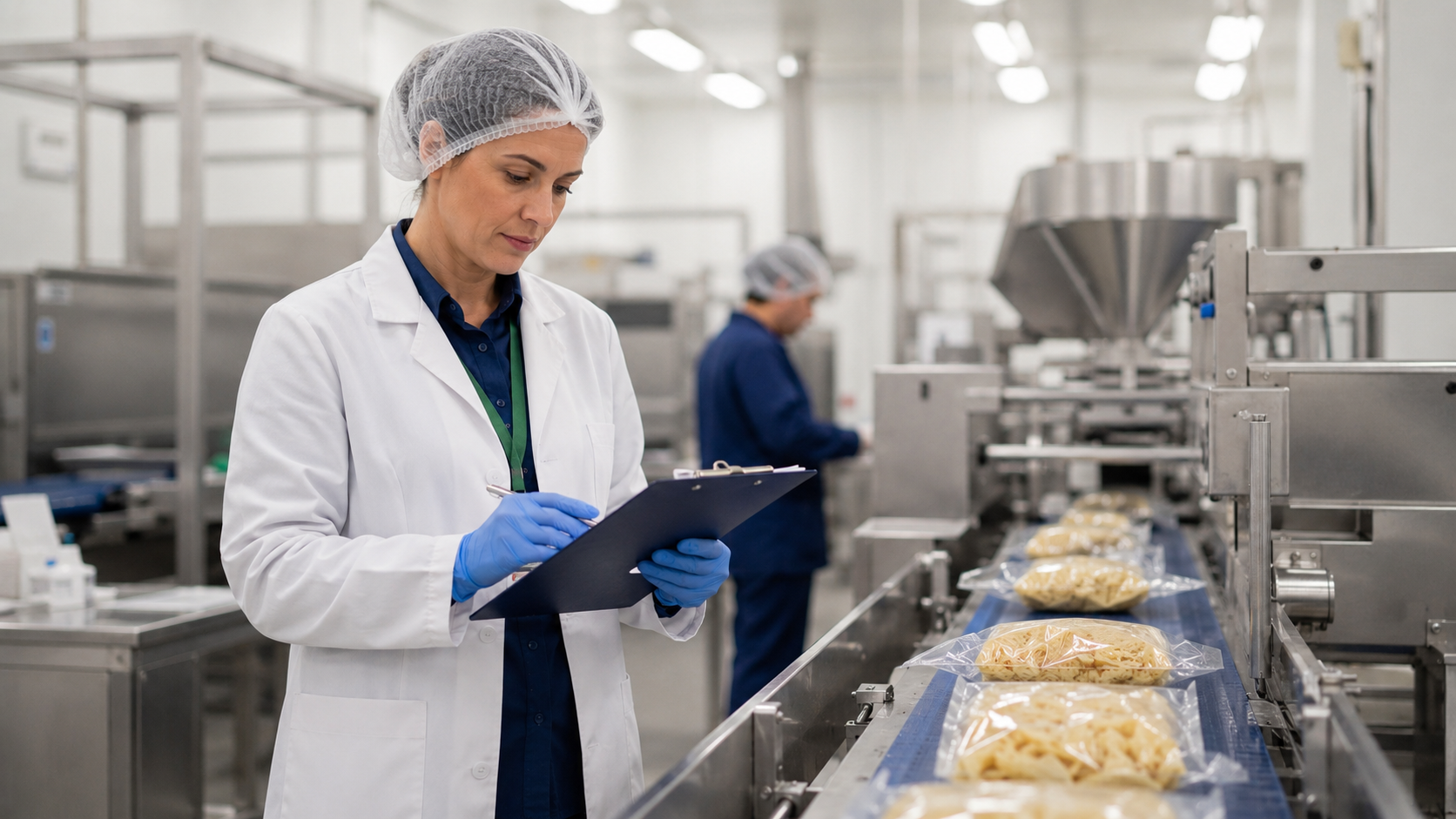
Food Safety Compliance New Zealand: Complete Guide for Food Businesses
Need help with food safety compliance? Contact AFVA for free initial guidance. Tell us about your products, location and any audit, registration or verification deadline.
Call 022 128 1203 | Email AFVA
Food safety compliance in New Zealand means meeting the food safety requirements that apply to your business and being able to demonstrate that those requirements are being followed in practice.
Depending on your business activities, food safety compliance may involve choosing the correct regulatory pathway, registering your business, operating under a Food Control Plan (FCP), National Programme or Risk Management Programme (RMP), maintaining appropriate records, managing food safety risks and completing the required verification.
This guide explains what food safety compliance in New Zealand means, how the main food safety pathways work and how to review your business using a practical compliance checklist.
Use this guide as a broad self-review tool. It does not replace the requirements of your specific Food Control Plan, National Programme, RMP, registration conditions or other applicable legislation.
On this page: What compliance means · Food safety pathways · Registration · Verification · 15-point checklist · Records · Corrective actions · Review routine · FAQs
What Does Food Safety Compliance Mean in New Zealand?
Food safety compliance is more than having a food safety manual or registration certificate.
A food business needs to understand which requirements apply to its actual activities, implement the required controls, keep appropriate evidence and demonstrate that the system works in day-to-day operations.
For many New Zealand food businesses, compliance involves four connected areas:
-
The correct food safety pathway
-
Registration and applicable approvals
-
Implementation, records and corrective actions
-
Ongoing verification and review
The exact requirements depend on the products, processes, premises, activities and regulatory framework applying to the business.
MPI's food safety toolkit provides official resources for understanding food safety requirements, plans, programmes and records.
Which Food Safety Pathway Applies to Your Business?
Before buying a manual, creating forms or preparing for an audit, identify the regulatory pathway that applies to your actual operation.
A change in activity can change the requirements. For example, a business that previously stored sealed food may have different obligations if it starts repacking, processing or preparing that food.
Food Control Plan (FCP)
A Food Control Plan sets out how a food business manages relevant food safety risks.
Depending on the business, this may involve a template Food Control Plan, My Food Plan or a Custom Food Control Plan.
If you need help understanding the difference, see our guide to Food Control Plans and National Programmes.
National Programme
National Programmes apply to specified food activities under the Food Act 2014.
There are three levels:
-
National Programme 1 (NP1)
-
National Programme 2 (NP2)
-
National Programme 3 (NP3)
The correct level depends on the actual activities and requirements of the business. A National Programme business still needs to meet the applicable requirements, maintain records and complete the required verification.
See our National Programme Verification service if your business operates under NP1, NP2 or NP3.
Risk Management Programme (RMP)
Certain businesses operating under the Animal Products Act may need a Risk Management Programme.
RMP requirements can differ significantly from Food Act requirements, so businesses should confirm the correct regulatory pathway based on their products, processes and markets.
Other Requirements
Some food businesses may also have additional obligations relating to:
-
Food importing
-
Food exporting
-
Wine
-
Food labelling
-
Product composition
-
Animal products
-
Customer or certification standards
-
Specific product categories
A general food safety checklist cannot replace product-specific or activity-specific requirements.
Food Business Registration and Compliance
Registration is an important part of food business compliance, but registration itself does not mean that a business has completed its food safety obligations.
Depending on the applicable pathway, registration may involve a local council or MPI.
Before registering, the business should understand:
-
What food activities it carries out
-
Which plan or programme applies
-
Which sites are included
-
Whether evaluation is required
-
Whether verifier confirmation is required
-
Which registration authority applies
-
What supporting information is needed
Our Food Business Registration Process explains the main steps for identifying the pathway, preparing documents, arranging verification and completing registration.
After registration, the business must continue to operate according to the applicable requirements.
Verification Is Part of Ongoing Food Safety Compliance
Verification is an independent check of whether a food business is following its applicable food safety requirements and managing food safety risks effectively.
Verification is not simply a paperwork exercise.
Depending on the plan or programme, a verifier may review:
-
Food safety procedures
-
Temperature records
-
Cleaning records
-
Staff practices
-
Allergen controls
-
Supplier controls
-
Traceability
-
Recall readiness
-
Corrective actions
-
Registration scope
-
Actual food handling practices
The required verification arrangements and frequency depend on the food safety measure, business circumstances and performance.
See our Food Safety Verification Process for an overview of what businesses can expect.
If you are preparing for an upcoming verification or audit, our Food Safety Audit Preparation service can help identify gaps and organise the evidence needed for the review.
15-Point Food Safety Compliance Checklist
Use the following checklist to review your food business.
For each point, record:
-
Met
-
Action required
-
Not applicable
If something does not apply, record why. For each gap, identify the evidence, responsible person and target completion date.
1. Confirm Your Products and Activities
List everything your business makes, handles, imports, stores, transports or sells.
Check:
-
Products and product categories
-
Ingredients
-
Processing activities
-
Packaging and repacking
-
Storage
-
Distribution
-
Retail or food service
-
Online sales
-
Importing or exporting
-
All operating locations
Evidence to review: Product list, process descriptions and scope of the applicable plan or programme.
A change in products or processes should trigger a review of whether the existing food safety pathway and controls are still appropriate.
2. Confirm the Correct Food Safety Pathway
Check that your business is operating under the correct regulatory measure.
Review whether you are operating under:
-
A Food Control Plan
-
My Food Plan
-
National Programme 1, 2 or 3
-
Risk Management Programme
-
Another applicable regulatory framework
Use MPI's current My Food Rules resources where appropriate.
Do not select a pathway simply because it appears easier. The correct pathway depends on the actual activities of the business.
3. Check Registration Details
Confirm:
-
Registered operator details
-
Trading name
-
Business locations
-
Activities covered
-
Registration status
-
Renewal dates
-
Applicable conditions
-
Verification arrangements
Evidence to review: Registration certificate, registration correspondence, previous verification report and due-date calendar.
If your business has changed products, processes, ownership, sites or activities, check whether the registration or food safety measure needs to be updated.
4. Review Food Safety Procedures and Controls
Check that staff have access to current procedures for the work they perform.
Review controls relating to:
-
Biological hazards
-
Chemical hazards
-
Physical hazards
-
Allergens
-
Cross-contamination
-
Temperature control
-
Cleaning
-
Personal hygiene
-
Supplier controls
-
Corrective actions
Evidence to review: Current procedures, hazard information, monitoring forms and supporting evidence.
Your documents should describe what your business actually does.
5. Check Staff Training and Competency
Food safety procedures are only effective when employees understand and follow them.
Check that training covers relevant duties for:
-
New employees
-
Casual employees
-
Relief staff
-
Supervisors
-
Employees changing roles
Ask staff to explain what they would do if a food safety control failed.
Evidence to review: Training records, induction information and competency evidence.
A signed attendance sheet is useful, but it does not by itself demonstrate that an employee understands the required task.
6. Review Suppliers and Receiving Controls
Check supplier controls for:
-
Ingredients
-
Packaging
-
Food products
-
Relevant services
-
Water and ice where applicable
Review receiving checks such as:
-
Product identity
-
Condition
-
Dates
-
Temperature
-
Packaging integrity
-
Supplier information
Evidence to review: Supplier records, specifications, receiving records and rejected-delivery actions.
Remember that ingredient substitutions can affect allergen information, product specifications and food safety controls.
7. Review Personal Hygiene and Cross-Contamination Controls
Check:
-
Handwashing facilities
-
Personal hygiene procedures
-
Illness reporting
-
Protective clothing where required
-
Separation of raw and ready-to-eat food
-
Equipment and utensil controls
-
Movement of people and food
Evidence to review: Hygiene procedures, training records and completed checks.
Review the operation during busy periods as well as quiet periods. Rushed changeovers and temporary storage can create risks that are not visible during a quiet inspection.
8. Check Temperature and Process Controls
Review controls for:
-
Receiving
-
Chilled storage
-
Frozen storage
-
Cooking
-
Cooling
-
Reheating
-
Hot holding
-
Display
-
Transport
Use the limits and methods specified by your applicable food safety system.
Also review other process controls where relevant, such as:
-
pH
-
Water activity
-
Formulation
-
Filtration
-
Sieving
-
Other validated controls
Evidence to review: Monitoring records, process evidence and corrective actions following failed checks.
Follow one product or batch through the process and check whether the recorded evidence tells a consistent story.
9. Review Cleaning and Sanitation
Check that cleaning procedures cover:
-
Food-contact surfaces
-
Equipment
-
Utensils
-
Difficult-to-clean areas
-
Storage areas
-
Waste areas
Review:
-
Cleaning chemicals
-
Dilution requirements
-
Contact time
-
Rinsing requirements
-
Cleaning verification where required
Evidence to review: Cleaning schedules, chemical information and completed cleaning records.
A cleaning schedule should reflect the actual equipment and environment rather than being a generic template.
10. Review Allergen Management and Food Labelling
Check that allergen information remains consistent across:
-
Supplier information
-
Recipes
-
Specifications
-
Production
-
Storage
-
Labels
-
Customer information
Review controls for unintended allergen cross-contact.
For packaged food, check applicable requirements for:
-
Product name
-
Ingredients
-
Allergen declarations
-
Date marking
-
Storage instructions
-
Lot identification
-
Other mandatory information
Use current FSANZ allergen labelling guidance when reviewing packaged-food labels.
11. Inspect Premises, Equipment, Waste and Pest Controls
Check for:
-
Damaged surfaces
-
Condensation
-
Leaks
-
Pest access
-
Poorly maintained equipment
-
Waste accumulation
-
Chemical-storage problems
-
Areas that cannot be effectively cleaned
Evidence to review: Inspection findings, pest-control reports, maintenance records and completed corrective actions.
Assign unresolved defects to a responsible person and give each action a target date.
12. Check Measuring Equipment
Review thermometers and other measuring devices used for food safety controls.
Check:
-
Suitability
-
Identification
-
Accuracy
-
Calibration or verification requirements
-
Servicing
-
Actions following equipment failure
Evidence to review: Equipment records, accuracy checks and service records.
If a measuring device fails an accuracy check, consider what this means for the food and records since the last satisfactory check.
13. Review Traceability and Recall Readiness
Select a product or batch and determine whether you can identify:
-
Relevant ingredients
-
Supplier
-
Batch or lot information
-
Production details
-
Customers
-
Distribution destinations
Review your recall procedure and contact information.
Where required, carry out a mock recall or traceability exercise.
Evidence to review: Batch records, supplier records, dispatch information, traceability exercises and recall records.
The objective is to demonstrate that potentially affected food can be identified and controlled promptly.
14. Review Records and Document Control
Check that records are:
-
Completed when the activity occurs
-
Accurate
-
Legible
-
Retrievable
-
Protected from inappropriate alteration
-
Retained for the required period
Look for:
-
Missing entries
-
Repeated failures
-
Unexplained corrections
-
Records that no longer reflect the current process
-
Outdated procedures
Electronic records can work well when employees can enter, retrieve and preserve the required information.
Test whether your team can quickly find a particular record when asked.
15. Review Corrective Actions and Changes
Review complaints, incidents, verification findings and other food safety problems.
For each issue, ask:
-
What happened?
-
What food was affected?
-
What immediate action was taken?
-
Why did it happen?
-
What prevents it happening again?
-
What evidence shows the action was completed?
-
Has the corrective action been effective?
Also review changes to:
-
Products
-
Suppliers
-
Ingredients
-
Equipment
-
Premises
-
Processes
-
Packaging
-
Staff responsibilities
Changes can create new hazards or require updates to food safety documentation.
Food Safety Compliance Records
There is no single universal record set that is suitable for every food business.
Your required records depend on your activities, plan or programme and applicable requirements.
Depending on the business, records may include:
-
Temperature monitoring
-
Cleaning
-
Supplier checks
-
Receiving
-
Staff training
-
Allergen controls
-
Product specifications
-
Traceability
-
Recall exercises
-
Maintenance
-
Pest control
-
Corrective actions
-
Complaints
-
Verification
-
Internal reviews
The objective is not to create paperwork for its own sake.
Records should provide reliable evidence that important food safety controls are being implemented.
How Often Should You Review Food Safety Compliance?
There is no single review schedule that applies to every food business.
Follow the timing specified by your applicable plan, programme, verification requirements and product controls.
As a management routine, consider:
Daily or During Operations
Complete the checks required for the activity, such as:
-
Temperature monitoring
-
Hygiene
-
Receiving
-
Cleaning
-
Process controls
-
Product handling
Weekly
Sample completed records and check:
-
Missing entries
-
Corrective actions
-
Equipment issues
-
Repeated failures
-
Staff compliance
Monthly
Review:
-
Training coverage
-
Supplier changes
-
Complaints
-
Traceability
-
Open corrective actions
-
Document versions
-
Upcoming verification or registration dates
When Something Changes
Review food safety requirements before introducing:
-
New products
-
New ingredients
-
New equipment
-
New premises
-
New processes
-
New suppliers
-
New packaging
-
Significant changes to storage or distribution
The schedule should be proportionate to your actual operation and risk.
What Should You Do When You Find a Compliance Gap?
Finding a gap is only useful if you act on it.
A practical corrective-action process is:
1. Control the Immediate Risk
If potentially unsafe food is involved, follow your applicable procedure to control or hold the affected product.
2. Establish What Happened
Identify:
-
Product
-
Batch
-
Time period
-
People involved
-
Relevant records
3. Correct the Immediate Problem
Take action to restore the required control.
4. Investigate the Cause
Ask why the problem occurred.
Was it:
-
Training?
-
Equipment?
-
Procedure?
-
Supervision?
-
Supplier?
-
Process design?
-
Recordkeeping?
5. Prevent Recurrence
Change the procedure, training, equipment or control where necessary.
6. Keep Evidence
Retain evidence showing that the corrective action was implemented.
7. Confirm Effectiveness
Check that the problem does not continue.
For formal verification findings, follow the timeframe and requirements given by the relevant verifier or authority.
Preparing for Food Safety Verification or an Audit
Start preparing well before the verification or audit date.
A useful preparation process is:
-
Review your current registration and food safety scope.
-
Check that your documents match actual operations.
-
Sample real records rather than creating records retrospectively.
-
Trace a recent product or batch.
-
Review staff knowledge.
-
Check cleaning, maintenance and pest controls.
-
Review allergen and label controls.
-
Check corrective actions from previous findings.
-
Test your recall and traceability arrangements where required.
-
Organise evidence so it can be retrieved quickly.
Our Food Safety Audit Preparation service can help businesses identify gaps, review records, prepare staff and organise corrective actions before an audit or verification.
Food Safety Compliance and Independent Verification
Consulting and independent verification are different functions.
A consultant may help develop or improve a food safety system, while a recognised verifier independently checks whether the applicable system is being followed.
If a consultant has developed a plan or programme, independence requirements may prevent that same person from subsequently evaluating or verifying it.
MPI provides specific guidance on hiring a food consultant and consultant independence.
If you need independent verification, see our Food Control Plan Verification or National Programme Verification services.
When Should You Get Professional Food Safety Support?
Professional support may be useful when:
-
You are starting a new food business.
-
You are unsure which food safety pathway applies.
-
You are developing or updating a Food Control Plan.
-
You are operating under a National Programme.
-
You need help preparing for verification.
-
You have repeated corrective actions.
-
Your business is introducing a new product or process.
-
You need HACCP support.
-
You are preparing for customer or certification audits.
-
Your current documentation does not match your operation.
AFVA provides Food Safety & Quality Consulting support for New Zealand food businesses, including food safety system reviews, compliance support, corrective-action support and practical implementation guidance.
AFVA also provides HACCP Consulting and food safety plan support where appropriate to the business and agreed scope.
Frequently Asked Questions About Food Safety Compliance in New Zealand
What is food safety compliance in New Zealand?
Food safety compliance means meeting the food safety requirements that apply to your business and demonstrating that the required controls are implemented effectively.
Depending on the business, this can involve registration, a Food Control Plan, National Programme, RMP or another applicable regulatory pathway, together with records and verification.
Is food safety registration the same as compliance?
No.
Registration is an important part of operating legally, but registration does not mean that a business can stop managing food safety.
The business must continue following the applicable requirements, maintain records, address problems and complete required verification.
Does every food business need a Food Control Plan?
No.
The correct food safety measure depends on the activities of the business. Some businesses operate under a Food Control Plan, while others may operate under a National Programme or another applicable framework.
Use MPI's current tools and guidance to identify the appropriate pathway.
Do National Programme businesses need verification?
National Programme businesses generally have verification requirements. The exact arrangements and frequency depend on the applicable programme, business circumstances and performance.
What records should a food business keep?
Required records depend on the applicable food safety measure and activities.
They may include temperature, cleaning, supplier, training, traceability, allergen, corrective-action and other operational records.
How often should food safety compliance be reviewed?
Follow the requirements of your applicable plan or programme.
Businesses should also review their systems when significant changes occur and use appropriate internal checks to identify problems before they become repeated verification findings.
Can a food safety consultant guarantee successful verification?
No.
A consultant can help prepare and improve a food safety system, but a consultant should not guarantee a registration or verification outcome.
The independent verifier or relevant authority makes decisions within its own regulatory role.
Can the same consultant verify the system they developed?
Independence requirements can prevent this.
MPI states that a consultant who writes a food safety plan or programme cannot evaluate or verify that same plan or programme.
Can AFVA help with food safety compliance?
Yes. AFVA provides food safety verification, auditing and consulting support within its recognised scope and applicable independence requirements.
Support may include Food Control Plan verification, National Programme verification, food safety consulting, audit preparation, HACCP support and compliance reviews.
Need Help With Food Safety Compliance?
Food safety compliance is an ongoing process.
The goal is not simply to have a certificate, manual or completed checklist. Your food safety system should match your actual operation, your staff should understand the controls, your records should provide genuine evidence and your business should be ready to respond when something goes wrong.
AFVA supports food businesses across New Zealand with practical food safety verification, auditing and consulting services.
If you are unsure which requirements apply to your business, need help preparing for verification or have identified gaps in your current system, contact AFVA for free initial guidance.
Call 022 128 1203
Contact AFVA: https://www.foodverification.co.nz/contact-us/
Official Food Safety Resources
For current regulatory information, always check the latest guidance from the relevant authority.
Published: 10 September 2026
This article provides general food safety information and is not a substitute for advice specific to your business. Food safety requirements depend on the actual products, processes, premises, markets and regulatory pathway. Confirm current requirements with MPI, your registration authority, your verifier or another appropriately qualified professional before making compliance decisions.
Need Practical Food Safety Support for Your Business?
Contact us for free initial guidance. We provide practical, plain-English food safety support for New Zealand food businesses across all service areas.
This article provides general information only and is not a substitute for professional advice specific to your situation. Contact us for guidance based on your actual food activities and requirements.