
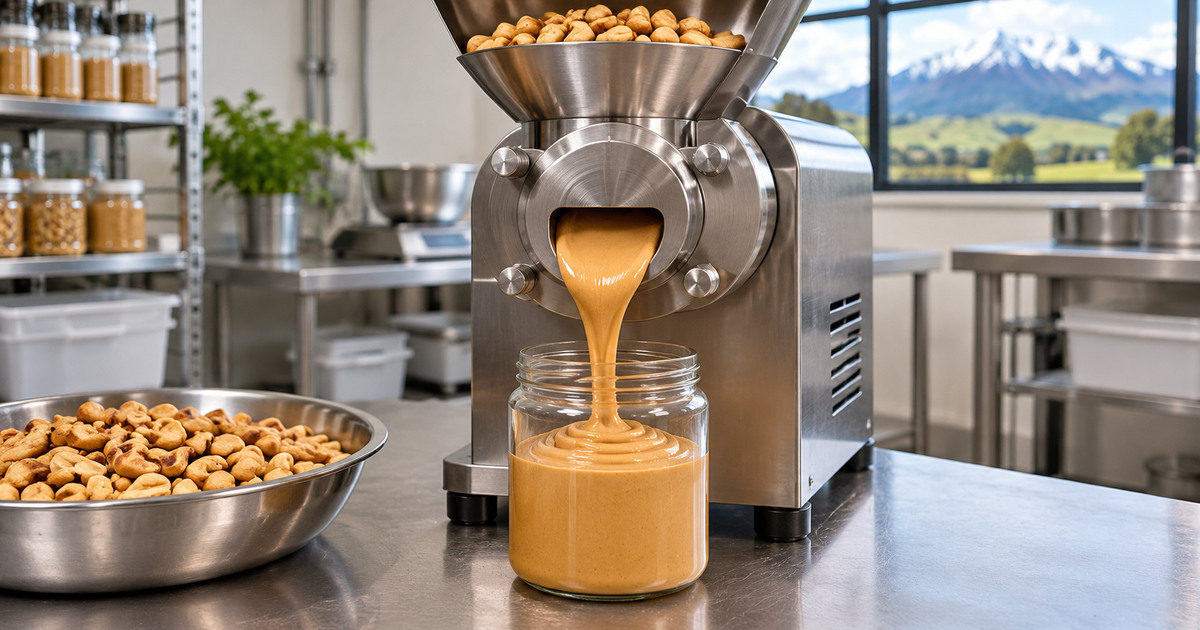
If you make peanut, almond or cashew butter for sale, your verification evidence starts with the nuts you buy. Be ready to explain how you know they’re suitable for a ready-to-eat spread, how you protect them during grinding and filling, and how each jar gets the correct allergen label. MPI’s National Programme 2 guidance
Which registration applies to nut butter?
The Food Act 2014 lists nut butters, including peanut butter, under National Programme 2 (NP2) for manufacturers of shelf-stable condiments. For this category, shelf stability means the unopened product can be safely stored at room temperature. Some products still need refrigeration after opening. If your spread needs refrigeration before opening, check the Food Control Plan pathway. Include any separate roasting, retail or food service activities when checking your scope. Food Act 2014, Schedule 2 · MPI’s My Food Rules tool
Check what happens before and after roasting
Salmonella can survive in peanut butter even when low water activity prevents it from growing. If you buy roasted nuts, check the supplier’s evidence that they’re suitable for ready-to-eat use. If you roast them yourself and rely on roasting to control Salmonella, establish that your process works for the nuts, equipment and batch sizes you use. Protect roasted nuts from contact with raw nuts, shared utensils and contaminated surfaces before grinding and filling. MPI’s risk profile for Salmonella in peanut, sesame and cocoa products
Consider chemical hazards when approving suppliers. MPI has recalled peanut products for aflatoxin above acceptable levels. Keep supplier specifications and relevant supporting evidence, and link each incoming lot to the finished jars. If you add a wet ingredient, review the finished spread’s water activity and shelf life before carrying over the storage instructions from your original recipe. MPI’s peanut product recall notice · MPI’s shelf-life guidance
Check the product name and allergen declarations
A product sold as peanut butter must be a peanut-based spread containing at least 850 g of peanuts per kilogram. For retail packs that require an ingredient list, use the prescribed names for allergens, such as peanut, almond or cashew. Show them in bold in the ingredient list and in a separate bold Contains statement. If several spreads share a grinder, check how you prevent cross-contact and how staff confirm the correct label before packing. Food Standards Code, Standard 2.10.4 · MPI’s allergen labelling guide
Prepare for your first NP2 verification
Choose a recognised NP2 verifier and get their confirmation letter before applying to register. For your first verification, choose a finished jar and gather the records that show what went into it, how you made it and where the batch went. Useful evidence includes:
- Supplier specifications and incoming nut lot numbers.
- The batch record and evidence for the relevant roasting or supplier controls.
- Cleaning and label checks for the changeover between recipes.
- The finished label, jar lot code and relevant dispatch records.
MPI’s NP2 registration and verification steps · MPI’s NP2 record-keeping guidance
Discuss verification or label review with AFVA
Starting a nut butter business or adding a new spread to your range? Send us your product list, a brief outline of your process and your draft label. Contact Access Food Verification & Auditing Limited (AFVA) to discuss NP2 verification or label review.
Need Practical Food Safety Support for Your Business?
Contact us for free initial guidance. We provide practical, plain-English food safety support for New Zealand food businesses across all service areas.
This article provides general information only and is not a substitute for professional advice specific to your situation. Contact us for guidance based on your actual food activities and requirements.