
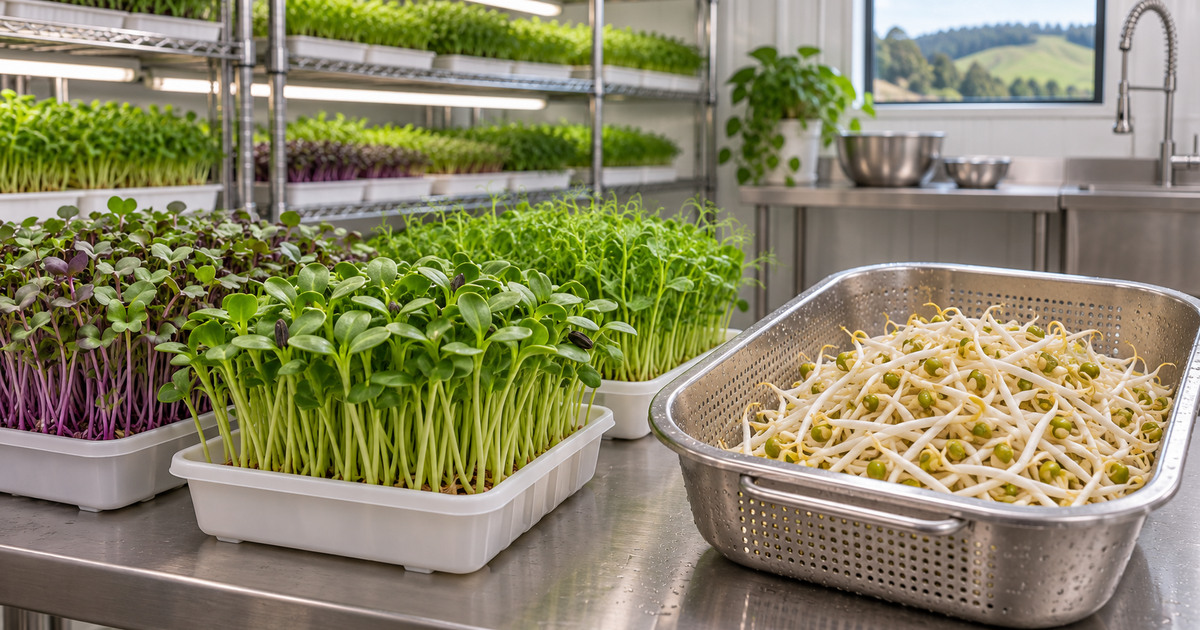
If you grow microgreens for cafés or pack seed sprouts for grocery stores, check your Food Act registration before taking wholesale orders. MPI lists both products under National Programme 1 (NP1) horticultural growing and packing. Your sales channel affects whether you need to register, and the way you grow the product affects the safety checks you’ll need. MPI’s NP1 scope of operations form
When do microgreens and seed sprouts need NP1 registration?
Growing, harvesting and packing microgreens or seed sprouts for supply to cafés, retailers or distributors generally falls under NP1. Schedule 3 of the Food Act 2014 provides a limited exemption for individual growers who minimally handle their own produce and sell it only directly to consumers. If you start supplying a café or shop, check your registration before the first wholesale delivery. If you manufacture another product, such as a packaged ready-to-eat salad, check that activity separately. Food Act 2014, Schedule 3 · MPI’s My Food Rules tool
What to check when growing sprouts for raw consumption
Seed sprouts, such as alfalfa and mung bean sprouts, are germinated seeds. Microgreens are young shoots typically cut above the growing medium. For seed sprouting, MPI advises sourcing seed specifically produced for human consumption from a trusted supplier and checking how the supplier manages contamination risks such as Salmonella. Washing raw sprouts cannot reliably remove harmful bacteria. If you sell ready-to-eat seed sprouts, check the applicable microbiological limits in the Food Standards Code and how you’ll demonstrate compliance. MPI’s NP1 guidance · MPI’s seed sprout safety guidance · Food Standards Code, Schedule 27
Keep records that link seed to harvest and dispatch
Pick a tray of microgreens or a batch of sprouts and follow it through your records. You should be able to identify the seed lot, when you harvested or packed the product, and which business customers received it. Include how you manage these checks in your day-to-day work.
- Record the seed supplier and lot. Link each seed lot to the trays or batches that use it.
- Check that water is suitable for each use, including irrigation, any washing after harvest, and cleaning food-contact equipment. Keep test results where required for your water supply.
- Be ready to show how you clean trays, harvest tools and packing surfaces, and how you protect harvested produce from contamination.
- Link finished batch codes to harvest, packing and dispatch records so you can identify affected packs if a supplier reports a seed issue.
MPI’s NP1 guidance on water, hygiene and traceability
Arrange NP1 registration and verification
Choose a recognised NP1 verifier before applying. Include their confirmation letter and your scope of operations with your registration application. A business based in one council area generally registers with that council. If you operate sites across several council areas, MPI explains the options for registering each site or registering them together. Bring a completed batch record to your first verification so you can show how the controls work in practice. MPI’s NP1 registration and verification steps · MPI’s registration guidance
Discuss your horticulture verification with AFVA
Growing microgreens or seed sprouts for wholesale? Tell us what you grow, where you pack it and who you supply. Contact Access Food Verification & Auditing Limited (AFVA) to discuss NP1 verification for your operation.
Need Practical Food Safety Support for Your Business?
Contact us for free initial guidance. We provide practical, plain-English food safety support for New Zealand food businesses across all service areas.
This article provides general information only and is not a substitute for professional advice specific to your situation. Contact us for guidance based on your actual food activities and requirements.