
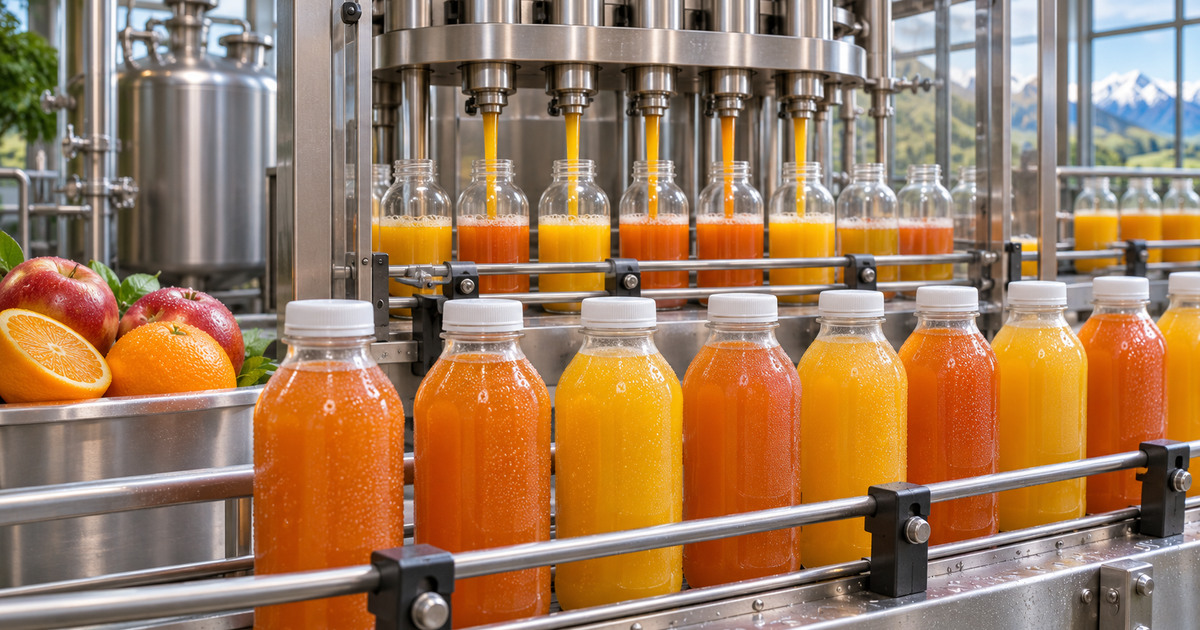
If you bottle fresh fruit or vegetable juice for shops, cafés or direct orders, decide how you’ll control food safety through to the end of its shelf life. Your process, package and cold chain need to work together. This is especially important if you plan to sell cold-pressed juice without pasteurising it. MPI’s National Programme 3 guidance · MPI’s shelf-life guidance
Does bottled chilled juice fall under NP3?
Manufacturing fruit or vegetable juice generally falls under National Programme 3 (NP3). Schedule 2 of the Food Act 2014 gives chilled orange juice as one example. It places juice squeezed and served for immediate consumption, such as at a juice bar, in the food service sector, where a Food Control Plan applies. If you run a café and want to add a bottled line, check both activities in My Food Rules and confirm whether your registration needs to change. Food Act 2014, Schedule 2 · MPI’s My Food Rules tool
Decide how you’ll control microbiological hazards
Pressing and bottling can carry contamination from produce or equipment into the juice. Work through your supplier and receiving checks, produce handling, the cleaning and sanitising of presses and fillers, and any treatment you use. Refrigeration helps control growth during storage. It cannot make contaminated juice safe. For unpasteurised juice, establish how you’ll manage the hazards and what evidence supports the safety of the finished drink under its intended storage conditions. MPI’s NP3 guidance on processing and storage · MPI’s raw juice recall notice
Check your registration pathway before investing in specialised treatment. The Food Notice on Food Control Plans and National Programmes prohibits using certain processes, including high-pressure processing and ultraviolet processing, under a national programme to control microbiological hazards. If your proposed juice relies on one of those processes, check the Food Control Plan pathway before proceeding. MPI Food Notice, clause 4.3 and Schedule 1
Set the shelf life and check the retail label
Base shelf life on the actual juice formulation, production process, sealed bottle and storage conditions. Review the evidence if you change the recipe, treatment, filling process or pack. For packaged retail juice, check the product description, lot identification, supplier details and applicable date mark and storage instructions. If you describe a product as fruit juice or vegetable juice, check the Food Standards Code requirements for that description. MPI’s shelf-life guidance · MPI’s retail food labelling guidance · Food Standards Code, Standard 2.6.1
Bring a complete batch record to verification
Ask a recognised NP3 verifier for a confirmation letter before applying to register. Arrange your first verification once you know when you’ll be operating. A new NP3 business must be verified within six weeks of registration. For the visit, select a batch and be ready to show:
- Which produce lots went into the batch and which bottles came out of it.
- The processing and filling checks that apply to that product, including treatment records if used.
- How you monitored chilled storage and dispatch, and what you did if a check failed.
- Which business customers received the batch and how you could identify affected stock for a recall.
MPI’s NP3 registration steps · Food Regulations 2015, regulation 91
Discuss your bottled juice operation with AFVA
Planning a bottled juice line? Tell us what you make, how you process it, how you keep it chilled and where you intend to sell it. Contact Access Food Verification & Auditing Limited (AFVA) to discuss the verification or food safety support your operation needs.
Need Practical Food Safety Support for Your Business?
Contact us for free initial guidance. We provide practical, plain-English food safety support for New Zealand food businesses across all service areas.
This article provides general information only and is not a substitute for professional advice specific to your situation. Contact us for guidance based on your actual food activities and requirements.