
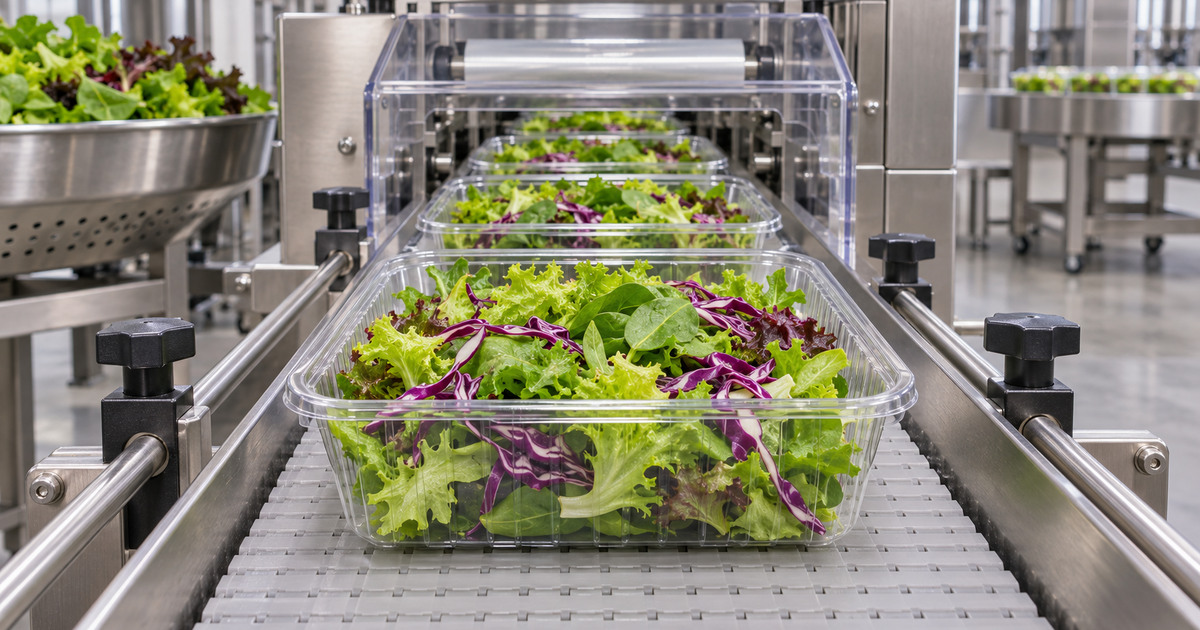
If you’re preparing to sell bagged greens, salad kits or tubs of coleslaw to other businesses, build your food safety plan around how the finished product will actually be made, stored and eaten. A customer can open a ready-to-eat salad and serve it straight away. Your plan needs to show how you manage food safety from receiving ingredients through to chilled dispatch. MPI’s food safety guidance for salad manufacturers
Do wholesale salad manufacturers need a custom Food Control Plan?
MPI lists manufacturers of ready-to-eat salads that they sell to other businesses among those that need a custom Food Control Plan (FCP). Schedule 1 of the Food Act 2014 covers fresh salads sold in packaging that consumers can eat as sold, without further preparation such as washing or rinsing. Preparing salads for immediate service and minimally processing horticultural produce are covered under separate food sectors. If you do several of these activities at the same site, include them when you check your scope. Food Act 2014, Schedule 1 · MPI’s custom FCP guidance
Map what happens to each ingredient
Start with one finished product and draw its process flow. Show where ingredients are received and stored, what gets washed or cooked, where ingredients come together, and how the salad is packed, chilled and dispatched. If your range includes a leaf mix, a cooked-grain salad and a kit with a separate dressing, document the steps and hazards that differ. MPI’s scope form distinguishes fruit and vegetable salads from salads containing grains or animal products. MPI’s custom FCP guidance · MPI’s scope of operations form
What controls and records should the plan show?
For each control, write down what staff check, who checks it, when they check it and what to do if the result is outside the plan’s limits. Focus on what happens on the production floor. MPI’s custom FCP guidance
- Receiving and washing. Show how you approve suppliers and check incoming ingredients. Where you wash produce, describe how you manage the wash step, including water suitability and how you prevent contamination from spreading between batches.
- Preparation and packing. Show how you keep unwashed produce or other raw ingredients separate from ready-to-eat food. Include how you clean food-contact equipment and check that the correct label goes on each recipe.
- Temperature control. Where you cook ingredients such as grains, cover cooking and cooling in your plan. Set out how you check chilled storage and dispatch, and who decides what to do with affected stock if a check falls outside the plan’s limits.
- Traceability. Pick a finished pack and check that staff can link its lot code to the ingredient lots used and the customers who received it. MPI’s food safety guidance for salad manufacturers · MPI food recall guidance
Support the shelf life before printing the label
Base the shelf life on your actual recipe, process, packaging and expected storage and distribution conditions. A dressed grain salad and a bag of leafy greens can need different evidence. If a retailer asks for a longer shelf life or a different pack, check whether the existing evidence supports that change before committing to it. Use a use-by date where required for safety, and include any storage instructions needed to keep the food safe for the stated shelf life. MPI’s shelf-life guidance · MPI’s retail food labelling guidance
Arrange evaluation, registration and verification
For the usual custom FCP pathway, have the plan independently evaluated and arrange verification with a different recognised person before applying to register with MPI. Prepare your plan, site plans, scope of operations, evaluation report and verifier confirmation for the application. Evaluation checks whether the plan can produce safe and suitable food if followed. Verification checks how the business follows the registered plan in practice. Food Act 2014, section 53 · MPI’s guide to evaluation and verification
Talk to AFVA about your ready-to-eat salad operation
Tell us what salads you make, how they’re processed and packed, where you’ll sell them and what stage your Food Control Plan is at. Access Food Verification & Auditing Limited can discuss the evidence you’ll need and confirm whether independent evaluation is within our recognised scope. Contact AFVA to discuss your next step or request a quote. Contact AFVA
Need Practical Food Safety Support for Your Business?
Contact us for free initial guidance. We provide practical, plain-English food safety support for New Zealand food businesses across all service areas.
This article provides general information only and is not a substitute for professional advice specific to your situation. Contact us for guidance based on your actual food activities and requirements.