
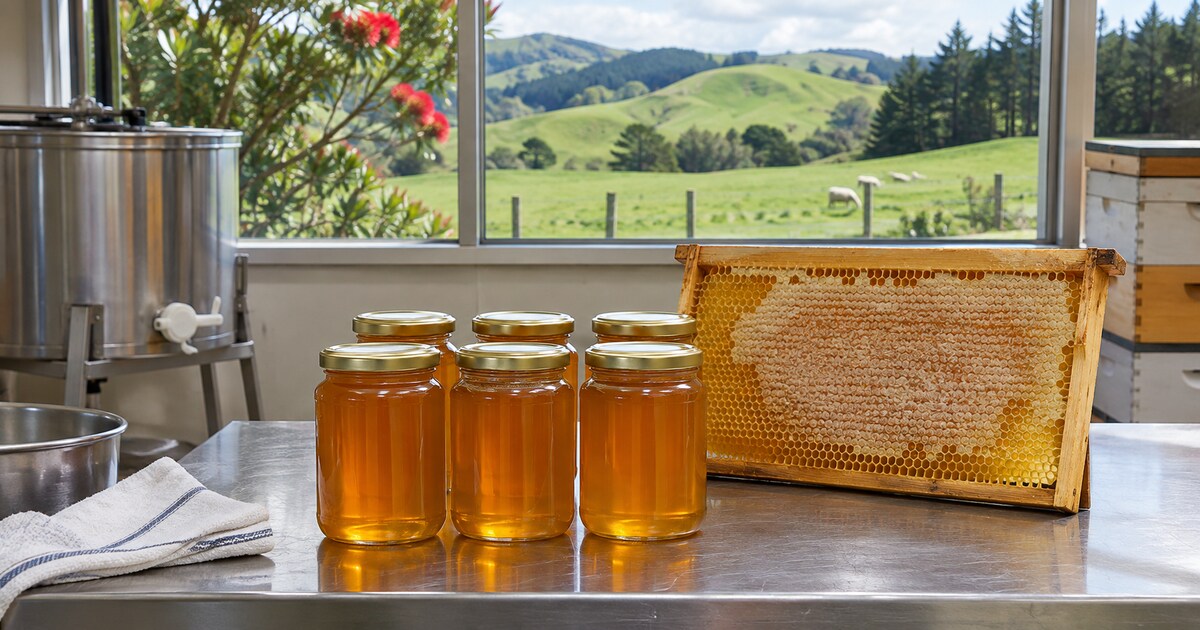
Two beekeepers can sell jars at the same Saturday market and have different food safety requirements. One extracts and packs their own honey. The other sends their honey to a registered facility and receives it back in sealed retail jars. Who packs the honey and who you sell it to are two of the first things to check before you start trading. MPI food safety rules for beekeepers
Do I need to register to sell honey in New Zealand?
If you extract or pack honey for sale and your operation falls under the Food Act 2014, the usual pathway is National Programme 1 (NP1). Schedule 2, Part 5 of the Act lists honey extractors and packers under NP1. That pathway can apply even if you sell all the honey yourself at a local market. Food Act 2014, Schedule 2 · MPI’s NP1 guidance
MPI says a hobbyist beekeeper can sell honey without their own registration or verification when the honey is pre-packaged at a facility registered with the council or MPI and the beekeeper sells it only directly to consumers. For example, a registered packer can extract your honey, bottle it and return the jars for you to sell at a market. If you plan to fill jars yourself or supply shops, check the pathway for those activities before you start. MPI food safety rules for beekeepers
How do I register a honey business under NP1?
- Describe what the business will do. List who supplies the honey, where it will be extracted and packed, and how the finished products will be sold. Include other activities, such as making a shelf-stable spread by mixing honey with other foods, because they can change which requirements apply. Check the full scope in MPI’s My Food Rules tool. MPI’s My Food Rules tool · Food Act 2014, Schedule 2
- Contact a recognised verifier before applying. Ask for written confirmation that they can verify your business and include it with your application. MPI’s NP1 registration steps
- Apply to the appropriate registration authority. A business based in one council district generally registers with its local council. If you operate from fixed sites in more than one council area, MPI describes two options: register the sites with the relevant councils or register them together with MPI. MPI’s food business registration guide
For a new NP1 business, initial verification is normally due within six weeks of registration. Agree on the timing with your verifier and keep records from the first batch you receive or pack. Food Regulations 2015, regulation 93 · MPI’s NP1 verification guidance
What tutin records does a honey packer need?
Tutin is a naturally occurring toxin that can get into honey. Under the Food Standard: Tutin in Honey, the last person to pack honey for sale in a package that directly touches the honey must be able to show compliance using an applicable option in the standard. The evidence depends on the option. It may include compliant lab results or a beekeeper’s written statement confirming they hold the required records for the honey supplied. If you’re both the beekeeper and final packer, keep the equivalent records yourself. Food Standard: Tutin in Honey, clauses 2.1–2.7 · MPI guidance on managing tutin
Set up your records so the evidence follows the honey. For example, if you receive two drums from different beekeepers, record each supplier and drum ID, link each drum to its tutin evidence, and record which finished jar lots used the honey. If the evidence for one drum is unclear, identify it and hold it separate while you resolve the gap. That gives staff a way to prevent it being used and gives your verifier a record they can follow. MPI’s NP1 guidance on receiving food and traceability
What should I have ready for verification?
Choose a finished jar lot and see whether you can show where the honey came from, what supports its tutin status, when it was packed and where it went. Have your cleaning and equipment checks, a sample of the label you actually use, and your recall records available as applicable. If you sell to stores, check that your dispatch records identify which lots went to each customer. MPI’s NP1 guidance · MPI honey labelling guidance
What if the honey is destined for export?
Check the intended market before committing to a buyer or packer. If the country requires an official assurance, such as an export certificate, the relevant extraction, packing or storage activities must operate under a registered Risk Management Programme (RMP) under the Animal Products Act 1999. If you supply a New Zealand business that will export the honey, confirm the destination and supply-chain requirements with that buyer. MPI guidance on honey and bee product RMPs · MPI’s steps to exporting honey
Talk to AFVA about your honey business
Tell us where your honey is extracted and packed, how you sell it and whether you’re preparing to register or have a verification coming up. Access Food Verification & Auditing Limited can help you understand what to prepare and confirm whether your activities are within our recognised verification scope. Contact AFVA to discuss NP1 verification or request a quote. Contact AFVA
Need Practical Food Safety Support for Your Business?
Contact us for free initial guidance. We provide practical, plain-English food safety support for New Zealand food businesses across all service areas.
This article provides general information only and is not a substitute for professional advice specific to your situation. Contact us for guidance based on your actual food activities and requirements.