
Need help with this food safety decision? Review AFVA’s Food Control Plan verification information or contact AFVA for free initial guidance.
A kitchen’s chiller log can show that the chiller was cold while telling you very little about how quickly the centre of a deep tray of cooked food cooled. A useful cooling record connects one identifiable batch to the method, the readings and the decision staff made at the time.
Quick answer. Use the cooling card in your applicable Food Control Plan to set the checks and actions. Record the food, batch or identifying detail, method, measured temperatures and times, and any action taken. Show how you chose a representative batch and probe point. If the required evidence is missing or a limit is missed, keep the batch out of service and follow your plan.
Identify the cooling rule in the plan you actually follow
This guide is for food-service teams cooling freshly cooked food. Start with the version and card your business uses. MPI’s Simply Safe & Suitable template instructions explain the August 2026 update to version v39-00006. MPI says existing template operators need this update if they intend to add the covered activity of making and selling pre-cooked chilled meals with a shelf life of no more than five days, or frozen meals, directly to consumers. Check your registered scope before adding those activities.
The current v39-00006 cooling and freezing card starts the cooling clock when the food reaches 60°C. Cool it to 21°C or room temperature, whichever is colder, in less than two hours. Then move it to the fridge or chiller and cool it to 5°C or colder in less than four more hours. The overall cooling limit is less than six hours. These stages apply to freshly cooked food under this card. The separate 2-hour/4-hour rule applies to food held outside temperature control. If your business follows another food control plan, use the limits and checks that apply to it.
Demonstrate the method under normal demanding conditions
Write down what the cook actually does. A record that says only “chiller” misses whether the food was split into shallow trays, how deep the product was, how many trays went in together and which tray was checked. Pick a normal load and product likely to cool slowly for the method being demonstrated. Repeat checks as required by your plan. A quiet test run with half the usual load gives limited evidence for a busy service.
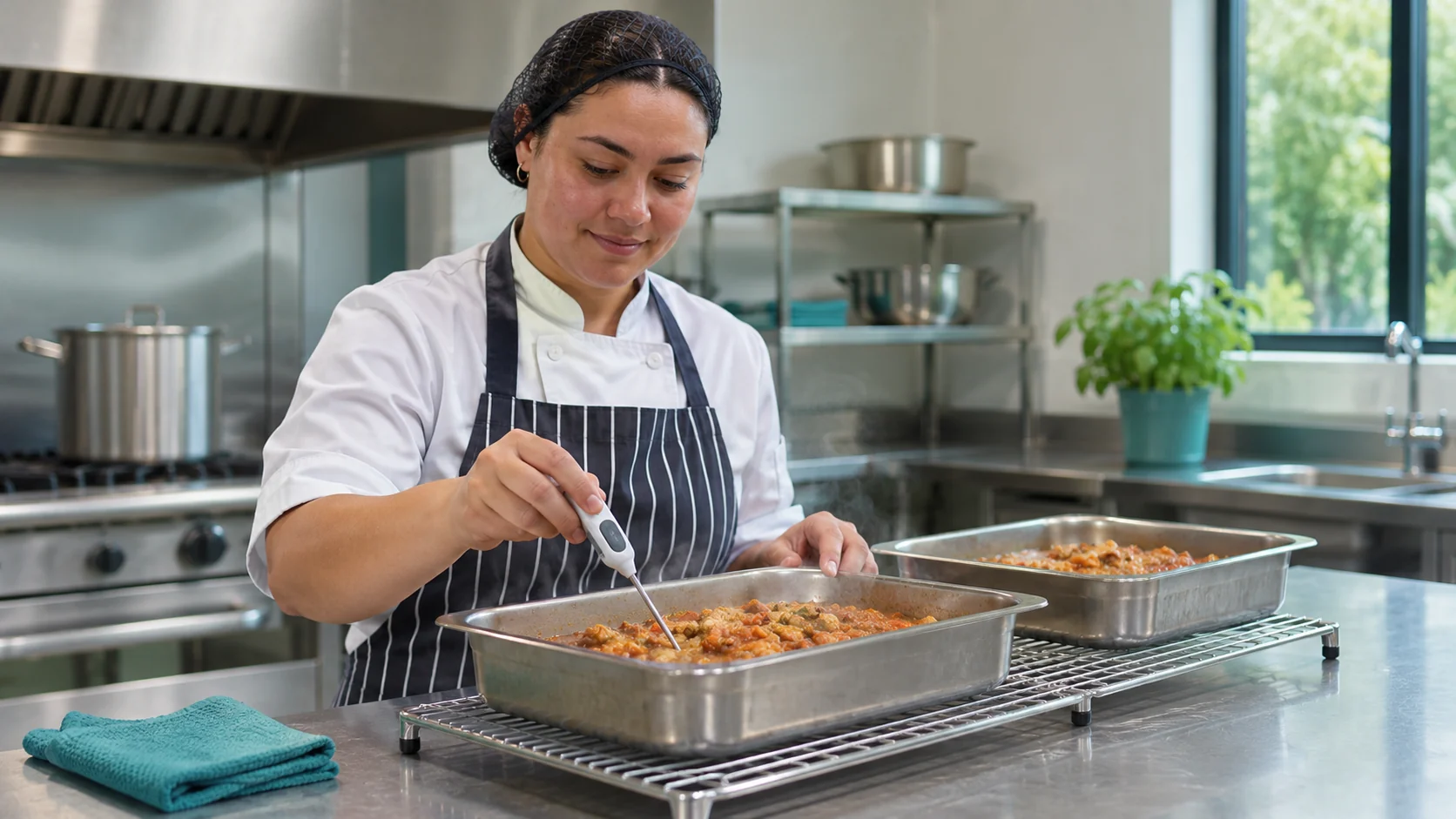
Choose a measurement point that represents the slowest-cooling part of the food, and use a clean, calibrated probe to check the food itself. Record the actual time and temperature as you go. If staff use a different pan, portion size or load later, check whether the proven method still applies. Use the AFVA guide to food thermometer checks to support confidence in the readings.
If you use the proven-method option, the proven-method card in MPI’s v39-00006 template calls for the same equipment, process and ingredients each time. Demonstrate three consecutive successful checks on different batches of the same food. Keep a record of the method. Once it is proven, check one batch of the food each week and keep those records for verification.
Build a record another shift can follow
Start with the MPI record templates or use a form that captures your plan’s information. The v39-00006 cooling card calls for records identifying the food, the date it was cooked and the time it took to cool, unless you use the proven-method checks described above. For a record staff can follow, include the batch identifier, method, actual temperatures and times, tray depth where relevant, initials and any action taken. Make the next check and its owner clear when one shift hands the batch to another.
For an illustrative check under the v39-00006 card, a cook starts timing a tray of curry at 60°C at 10.00 am. The room is warmer than 21°C. The cook records 20°C at 11.20 am, transfers the tray to the chiller and records 4°C at 1.50 pm. Write down the pan, portion depth, checks and initials so another person can judge what the numbers mean. Use separate evidence to assess a different product, chiller or load.
Protect cooked food from recontamination while it cools. If you also freeze it, the current card calls for hygienic portioning, handling and packaging after cooling, with gaps around packages so cold air can circulate. If you cool or freeze food for retail sale, also follow the plan’s packaging and labelling card.
Know what to do when a check is missed
If a time or temperature limit is missed, or you cannot establish what happened, keep the affected batch out of service and alert the responsible person. Under the v39-00006 card, discard food that fails the six-hour cooling limit and follow the plan’s troubleshooting card. For missing readings or other departures, follow your plan’s corrective action. A later cold reading cannot establish how long the food was warm. Keep the original readings, record what happened to the batch and review the cause before running the method again.
Prepare one real cooling record, the relevant card and the procedure for a failed check for your next visit. AFVA’s audit readiness guide explains how to connect records with what staff can demonstrate.
Frequently asked questions
Can I use a fridge display reading as my cooling record?
A chiller display measures its own sensor conditions. Use the method required by your plan to demonstrate the food’s temperature through the cooling stages.
How often do I have to record cooling checks?
Under v39-00006, record how each batch cools unless the proven-method option applies. After proving the method, check and record one batch of the food weekly. Use your applicable plan if it specifies different checks.
What if we start cooling a bigger batch or switch containers?
Compare the change with the conditions covered by your evidence. Check the applicable plan and confirm how to demonstrate the changed method before relying on earlier results.
How AFVA can help
Have your applicable Food Control Plan card, the cooling method staff use and a recent batch record ready. AFVA can discuss your verification route within its recognised scope and independence requirements.
General information only. Confirm the requirements that apply to your specific food activities, products, processes, locations and sales model.
Need Practical Food Safety Support for Your Business?
Contact us for free initial guidance. We provide practical, plain-English food safety support for New Zealand food businesses across all service areas.
This article provides general information only and is not a substitute for professional advice specific to your situation. Contact us for guidance based on your actual food activities and requirements.