
Need a clearer pH testing brief for a mixed food? Review AFVA’s shelf-life testing support or contact AFVA for free initial guidance.
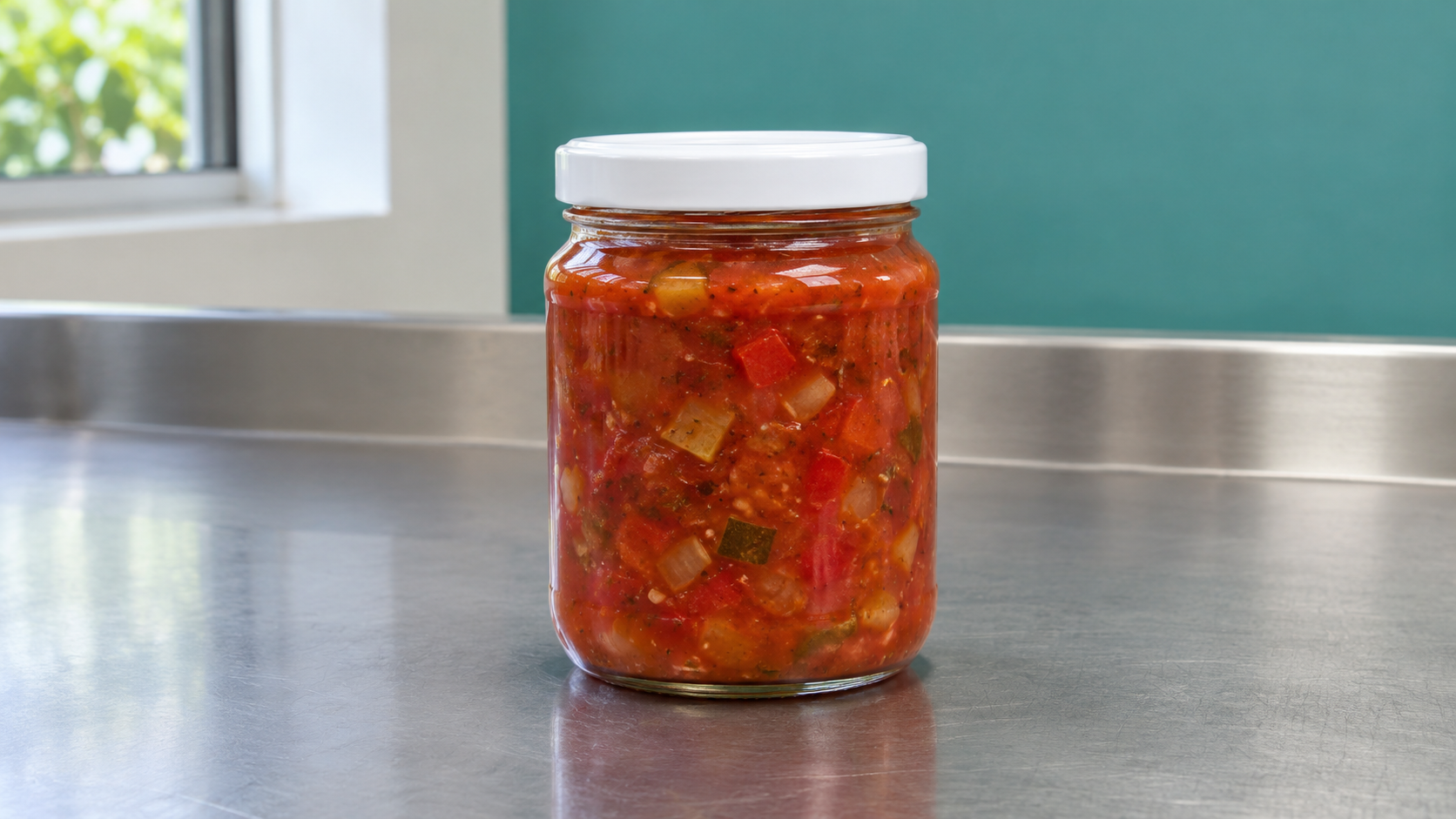
A jar of relish contains liquid, vegetable pieces and sometimes oil. If one result comes from its liquid and another from blended contents, the numbers may describe different samples. A useful food pH report starts with a sampling question, not simply a request to test a jar.
This guide is for New Zealand businesses arranging pH measurements for mixed or chunky foods. It explains how to describe the product and agree sample preparation with the laboratory. It does not set a safe pH limit, approve ambient storage or replace the controls established for your product and process.
Quick answer. Before collecting samples, agree the decision the test will support, which production units and food components will be represented, the preparation method, measurement timing and reporting details. Preserve the product’s identity and original condition. Ask the laboratory before separating, blending, diluting or combining samples; those choices affect what a result represents.
1. Start with the decision you need to make
Write one sentence explaining why you want the measurement. Comparing two trial recipes is different from investigating an unexpected production reading or checking an established control. Give the laboratory the relevant process instructions and explain who will interpret the report.
Ask whether the proposed work answers that question. An analysis price alone does not establish a suitable sampling design. These are planning examples, not three regulatory testing categories.
Three different pH testing questions
Purpose
Recipe development
Useful brief
Compare identified trials made and sampled under defined conditions.
Limit
A favourable trial result does not validate every future batch.
Purpose
Production monitoring
Useful brief
Follow the method and limits established in the applicable control procedure.
Limit
A different preparation method may not be comparable.
Purpose
Unexpected result
Useful brief
Identify affected stock, retained units, process history and the disputed measurement.
Limit
One reassuring retest does not explain the original deviation.
2. Describe what is actually inside the container
Supply the recipe version, process stage, pack size and a description of the physical mixture. Mention large pieces, seeds, skins, thick pastes, visible layers and oil. Explain whether each pack is filled from a mixed tank or whether solids and liquid are added separately. This helps the laboratory identify questions that a simple product name misses.
For example, two jars labelled vegetable relish may have different proportions of pieces and liquid. Sampling only what pours easily from the first jar would lose information about that difference. Keep photographs or filling records where they help explain the sample.
The US acidified-food pH methodology recognises that liquid and solid components can differ in acidity. It describes component and blended preparations. This is a technical example of why preparation matters; it is not a New Zealand legal method imposed on your food.
3. Agree which components the result will represent
Ask the laboratory whether the question requires a liquid measurement, a solid-component measurement, a defined whole-product preparation, or more than one of these. Request a clear description on the report. A result described only as pH can be difficult to compare later if nobody recorded what was measured.
Do not remove awkward pieces or add water simply to make a meter reading easier. Where a method includes blending, separation or dilution, the laboratory should specify how it is applied and recorded. If you undertake any preparation yourself, get written instructions first.
Avoid silently combining units from different production times. Agree whether units will remain separate and why. For the logistics of identifying and transferring samples, use the food sampling and chain-of-custody guide.
4. Set measurement timing and temperature deliberately
Tell the laboratory when the product was made, filled, cooled and sampled, and how it has been stored. If the process depends on acidity reaching the solids, ask the technical reviewer which measurement stage is relevant. Do not assume that an immediate mixing result represents the finished product after its components have equilibrated.
There is no universal waiting period supplied by this article. A product-specific process and agreed method should determine the timing. Keep a timestamp rather than an imprecise note such as yesterday’s batch.
The Canadian inspection procedure for processed products illustrates controlled timing, sample temperature and meter calibration within its own defined inspection scope. Its Canadian screening thresholds and timings are not default requirements for New Zealand products. Ask your laboratory for the conditions appropriate to your work.
5. Make routine meter results comparable with laboratory work
If you also measure pH on site, send the laboratory your current procedure and equipment details. Record the probe type, calibration checks, sample preparation, temperature and how a stable reading is recognised. Follow the equipment manufacturer’s instructions for use, cleaning, storage and checking performance. A display with more decimal places does not by itself establish better evidence.
When results disagree, compare the methods before deciding which number to trust. Were the same components, batch, product age and preparation tested? Was the probe appropriate for the matrix? Preserve the original readings and any repeat results with their explanations.
Ask about the laboratory’s relevant method and scope rather than assuming every accredited laboratory covers every food measurement. The laboratory accreditation and scope guide explains that separate check.
6. Use this pH laboratory-brief checklist
Prepare the following before dispatch. These are practical briefing recommendations; the laboratory may need additional information for the agreed method.
- Product name, recipe version, process stage and intended decision.
- Lot definition, production dates and how the selected units represent that lot.
- Number of units, pack sizes and any known variation in solids or liquid.
- Description of pieces, paste, oil layers and other preparation issues.
- Agreed preparation responsibilities: what you send and what the laboratory does.
- Production, sampling and storage history, with relevant times.
- Laboratory-confirmed containers, quantity, transport and receipt arrangements.
- Required individual results, sample descriptions, method identification and reporting date.
- The person responsible for reviewing the evidence and deciding the next action.
Keep a copy of the agreed brief with the report. If anything changes before sampling, confirm that the original instructions still fit. An unrecorded change of recipe or preparation can turn a useful comparison into an uncertain one.
7. Interpret results without extending their meaning
Check the reported sample identity and preparation before comparing the number with the applicable specification or process limit. A liquid-only result should not quietly become a statement about every solid piece or every jar. If evidence is incomplete, use your existing product-control procedure while the issue is reviewed.
Common mistakes include treating pH as interchangeable with titratable acidity, changing the sampling method between trials, and reporting an average without explaining the results behind it. Another is treating one pH report as permission to change storage conditions or shelf life.
If your real decision concerns an ambient sauce, read the separate shelf-stable sauce evidence review. That wider assessment considers the product and process evidence; this article addresses the narrower question of obtaining a meaningful pH sample.
Frequently asked questions
Can I send one unopened jar for pH testing?
Ask the laboratory and technical reviewer first. One jar may suit a limited development question, but it does not automatically represent a production lot. Agree the units, selection and purpose before dispatch.
Should I blend the product before sending it?
Only if the agreed method and laboratory instructions require you to do so. Sending intact identified units may preserve more preparation options. Describe the food first and confirm who is responsible for preparation.
Can I test only the liquid around the vegetables?
That measures the chosen liquid preparation. It should not be presented as a whole-product or solid-component result unless the applicable method and evidence support that interpretation.
Why might the on-site meter and laboratory disagree?
Check sample identity, food component, preparation, timing, temperature and equipment checks. Differences need investigation rather than an assumption that either location must be right. Keep both sets of original records.
Does a low pH result prove the food is shelf stable?
No. A pH measurement is one piece of evidence. Storage, shelf life and process decisions need the appropriate product-specific assessment, including relevant hazards and the controls relied on.
How AFVA can help
AFVA can help define the testing question, prepare a sampling brief and coordinate laboratory work within an agreed scope. Laboratory analysis is performed by appropriate third-party laboratories; AFVA does not present itself as an accredited laboratory. Bring the recipe, process description and any existing pH records so the next discussion addresses the decision you actually need to make.
General New Zealand food-business guidance, researched 21 November 2026. Overseas technical methods are identified as examples, not New Zealand legal requirements. Confirm the method, interpretation and controls appropriate to your product with the relevant technical professional and laboratory.
Need Practical Food Safety Support for Your Business?
Contact us for free initial guidance. We provide practical, plain-English food safety support for New Zealand food businesses across all service areas.
This article provides general information only and is not a substitute for professional advice specific to your situation. Contact us for guidance based on your actual food activities and requirements.