
Need help with this food safety decision? Review AFVA’s food safety and quality consulting service or contact AFVA for free initial guidance.
An off-site catering job can involve separate people preparing the food, driving it to the venue and serving it. If a venue fridge is full or the service time changes, someone needs to know what the food can safely do next. Agree on those decisions while you can still change the booking.
Quick answer. Before confirming the job, check that the proposed work is covered by your food safety arrangements and that the venue can support the menu and volume. Record who receives and checks the food, where it goes next, how ingredient information follows it and who decides whether service can continue after a delay or failure.
Confirm the job fits the plan and the venue
Map the work from the preparation kitchen to the point of service. Include who prepares, packs, transports, receives, stores, reheats, portions or serves the food. If a subcontractor or venue team is doing part of the work, identify what each business controls. Ask your registration authority or verifier about any activity or venue arrangement whose coverage is unclear, before making the commitment.
Under section 14 of the Food Act 2014, a person who trades in food must ensure it is safe and suitable. Section 50 also requires a registered Food Control Plan operator to comply with the relevant plan requirements and work within the capacity and capability of the facilities, equipment and staff. Where applicable, the Food Regulations provisions on contamination and hazard controls are also relevant. The checklist below helps put those responsibilities into practice for a specific job.
Ask the venue contact for the available refrigeration or hot holding space and its hours of access. Check the planned handwashing and cleaning facilities, safe water where needed, usable bench space and whether other teams will be sharing the area. Confirm this against the expected number of portions and the service sequence. AFVA’s shared commercial kitchen records guide has related checks when you also share preparation premises.
Name the person taking over at each step
Agree on what the sender provides and what the receiver checks before accepting the food. Put named contacts and a backup on the booking so the driver and service team have someone to call.
- Kitchen to transport. Provide dish or batch identification, dispatch details and any time, temperature or handling instructions your plan requires. Confirm who checks that the transport equipment is ready and the food is protected.
- Transport to venue. Agree where the vehicle unloads, who receives the food and checks it, where it goes immediately and how both sides record a problem.
- Venue to service. Give the person in charge of service the latest menu and ingredient or allergen information. Confirm who controls holding, serving and removing food from service under the applicable procedures.
Use AFVA’s menu allergen and ingredient-change records guide when a substitute changes the information the venue needs. If the information is unclear, hold the affected item from the relevant order or service until the team can confirm it.
Agree what to do if the plan changes
Decide who has authority to stop or change service if the delivery is late, the venue loses refrigeration, a carrier is damaged or the venue changes the serving time. Use the limits and response in the applicable food safety procedures. Record the actual times or observations, what was affected and who decided what could proceed.
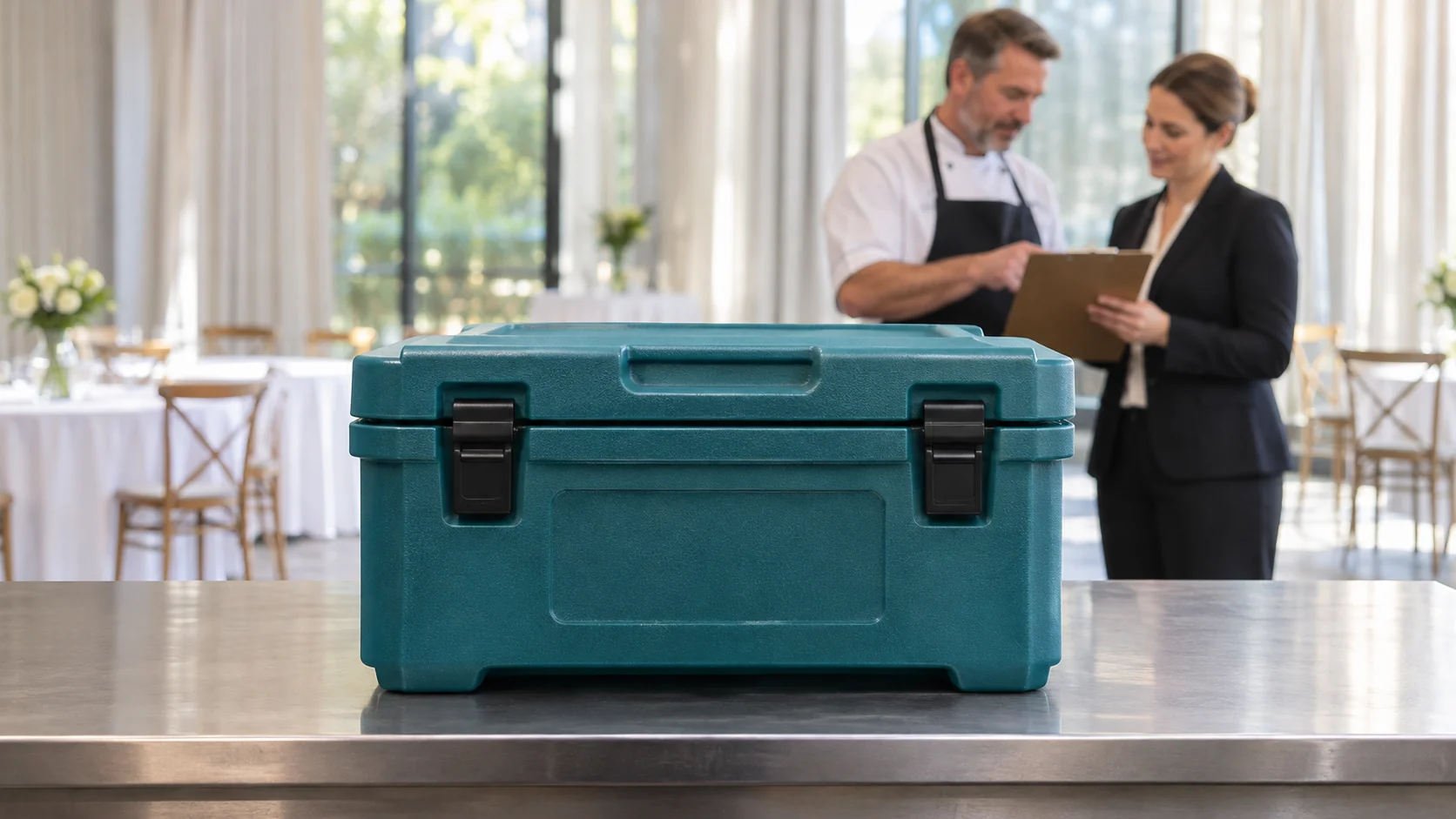
For example, the venue confirms space for one insulated carrier and the group adds a second service. Before agreeing to the extra service, confirm suitable holding space or arrange a delivery schedule the venue can handle. If the room is unexpectedly unavailable at delivery, use the agreed alternative or hold back the affected service while the responsible person assesses it. A delivery receipt alone gives no evidence that the food can safely be served later.
Keep the handover with the job record
Keep a copy of the venue agreement or checklist, final menu and any handling instructions, actual dispatch and receipt checks, substitutions, and decisions made when the plan changed. Store these with the records your plan or programme requires. After the event, check whether the actual access, storage and service matched what the venue confirmed. Update the booking checklist if an assumption caused a problem.
If the event also involves a mobile stall or food truck trading separately, check that setup on its own facts. AFVA’s food truck registration guide explains the mobile registration questions to raise.
Frequently asked questions
Can the venue take over temperature checks?
Agree who makes each check, whether the arrangement fits the food safety procedures and who gets the result. Confirm that the venue can carry out the check before confirming the service.
What if the venue does not have enough fridge space?
Change the volume, timing, menu or holding arrangement before accepting the job. Use a solution that can meet the controls for the food and the actual service conditions.
What should I do if an ingredient changes on the day?
Check the current supplier or recipe information, update the records and tell the person taking orders and serving. Keep the affected item out of the relevant service if the information is uncertain.
Does every job need the same handover form?
A written job record can suit the size and risks of the event. Keep whatever evidence your plan or programme requires and make the receiving and service responsibilities clear.
How AFVA can help
Talk to AFVA about reviewing your catering workflow or developing a practical job handover. Bring the menu, service times and the proposed split between the kitchen and the venue.
General information only. Confirm the requirements that apply to your specific food activities, products, processes, locations and sales model.
Need Practical Food Safety Support for Your Business?
Contact us for free initial guidance. We provide practical, plain-English food safety support for New Zealand food businesses across all service areas.
This article provides general information only and is not a substitute for professional advice specific to your situation. Contact us for guidance based on your actual food activities and requirements.